Thirty-nine-year-old Daniel Harper never planned to become a tech founder. He owned Pine Hollow Camp, a small independent campsite near Asheville, North Carolina, close to the Blue Ridge Mountains. The site had almost everything a weekend guest could want: open lawns, woodland trails, canvas tents, fire pits, picnic areas, family zones, and clear night skies. But the business was not growing steadily. Weekend occupancy was inconsistent. Most guests came from word of mouth, Facebook groups, and Instagram posts. Every consultation happened through private messages.
  • “Is June 19 available?”
  • “How many guests can come?”
  • “Are meals included?”
  • “Are children allowed?”
  • “What is the price for the campfire dinner?”
  • “Do you offer birthday packages?”
Daniel spent hours answering the same questions. Some guests asked for days and then disappeared. Others requested the same weekend dates at the same time, forcing him to manually check messages and spreadsheets to avoid double bookings. The problem was not the campsite itself. The problem was that Pine Hollow’s value was scattered across photos, posts, chats, and manual records. There was no clear digital flow where guests could understand the offer, check dates, select experiences, and confirm a booking by themselves. A slow spring weekend became the turning point. Daniel spent three hours answering questions for a family event, only to lose the booking to a competitor with a simple, dedicated booking page. That loss made him rethink the business. He looked into professional app development services, but the cost was high and the timeline was long. Many existing booking tools also felt too rigid. They were built around hotel-style logic: rooms, fixed check-in rules, and standardized inventory. Camping was different. Pine Hollow was not selling identical rooms. It was selling atmosphere, memories, add-on experiences, and flexible weekend plans. Daniel did not want to force his campsite into a hotel booking template. He wanted guests to feel the experience before they booked it. That was when he found AutoCoder.cc. AutoCoder.cc was not just another page builder. It gave Daniel a lighter way to turn his real business workflow into a working mobile app. Instead of starting with code, templates, or technical documents, he could start with what he knew best: how his campsite actually operated.

1. Building a Lightweight Initial Version with AutoCoder.cc

AutoCoder.cc changed how Daniel approached product development. He did not need to become a developer first. He did not need to prepare a long technical specification. He only needed to describe the operating logic of Pine Hollow clearly. For guests, the app needed to support a complete journey: explore camping experiences, check available dates, select adults and children, add premium outdoor services, and confirm the reservation. For Daniel and his team, the app needed a separate operator side: publish campsite information, manage bookings, create add-on services, update experience packages, organize gallery assets, and reduce dependence on scattered private messages. This was the first important difference. Daniel was not simply building a beautiful landing page. He was turning his campsite’s real workflow into a structured product with separate paths for customers and operators.
Two phone screens showing the Camp Nights app homepage with 'Escape to the Quiet,' a date picker, and curated camping experiences
The homepage became the emotional entrance of the product. Daniel understood that a plain form-based page would make Pine Hollow feel ordinary. A strong visual homepage, however, could immediately show guests what kind of weekend they were about to book. The app did not start by asking users to fill out a cold reservation form. It first helped them feel the atmosphere: campfires, forest nights, open lawns, quiet tents, and slow weekend escapes. That mattered because Pine Hollow was not selling identical rooms. It was selling outdoor memories. Then Daniel built one of the most important parts of the system: multi-role login.
Camp Nights app login screen with Explorer (Customer) and Guide (Host) role options, email and password fields
Pine Hollow was not a simple one-way website where every user should see the same page. The business had two very different journeys. Guests needed to enter as Explorers. Their job was simple: browse camp nights, feel the atmosphere, choose dates, select add-ons, and complete a reservation. Daniel and his team needed to enter as Guides. Their job was completely different: manage campsite content, review bookings, update packages, organize services, handle customer questions, and operate the business behind the scenes. AutoCoder.cc made this role-based structure possible from the beginning. Instead of forcing Daniel to build two separate products, AutoCoder.cc helped him create one app with different entry points. The same system could serve customers on the front end and operators on the back end. This was important because Pine Hollow did not only need a better-looking online presence. It needed a real operating system behind the customer experience. Once the multi-role structure was clear, Daniel could continue breaking the business into practical modules: campsite presentation, experience selection, date selection, guest selection, add-on selection, order confirmation, gallery management, and Host Mode operations. AutoCoder.cc helped translate that business logic into a mobile-first application structure. The app included a cinematic homepage, role-based login, curated camping night packages, step-by-step booking, add-on modules, confirmation pages, image galleries, and a dedicated operator-side management flow. To make the case more concrete, readers can open the live customer-side preview here: Explore the Camp Nights App Preview. The product did not feel like a traditional hotel booking system. It was designed around the emotional atmosphere of camping: campfire dinners, stargazing tents, open-air cinema, peaceful lakeside mornings, and slow weekend escapes. This gave Daniel his first major insight: Local businesses do not always need more exposure first. Many of them need a better way to package and present the value they already have. Before AutoCoder.cc, Pine Hollow was a campsite with good resources but weak digital organization. Its value lived in scattered photos, repeated explanations, private messages, and manual booking records. After the first app version was built, Pine Hollow became easier to understand and easier to operate. Guests were no longer looking at random campsite information. They were entering a clear, bookable outdoor experience. Daniel was no longer only renting out woodland space. He was productizing weekend memories — and AutoCoder.cc gave him the structure to make that product usable for both customers and operators.

2. Stop Selling a Campsite. Start Packaging an Experience.

Before using AutoCoder.cc, Daniel thought his job was to show people what Pine Hollow had.
  • A tent area.
  • A fire pit.
  • A barbecue setup.
  • A few forest paths.
  • A quiet place to spend the weekend.
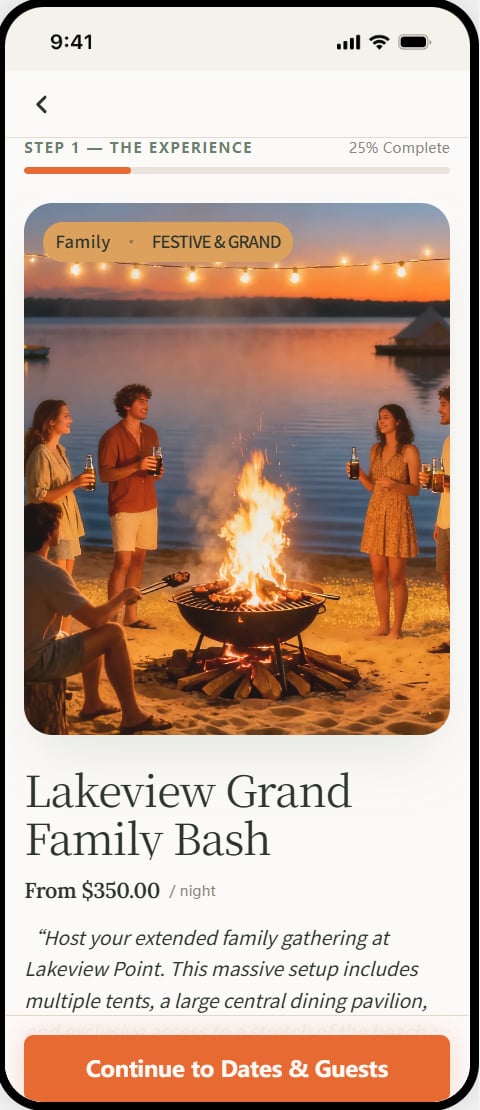
But after months of unstable bookings, he began to understand the deeper issue: guests did not respond strongly to a list of facilities. They responded to scenes, emotions, and stories. A guest did not want to book “a campsite.” They wanted a stargazing night with someone they loved. They wanted a campfire dinner with friends. They wanted an outdoor movie under string lights. They wanted a slow family morning with coffee, trees, and no city noise. That was when Daniel’s thinking changed. He stopped asking, “How do I list what my campsite has?” He started asking, “How do I turn each part of my campsite into a bookable memory?” AutoCoder.cc made this shift visible inside the product. Instead of leaving campsite resources as scattered descriptions, Daniel could turn them into structured experience cards. Each camp night could have its own image, short description, price, best-for label, and booking action. The result was very different from a standard reservation page. This changed how guests understood Pine Hollow. “Campfire Dinner” was no longer just a barbecue option. It became a warm evening around firelight, wooden tables, and shared food. “Outdoor Cinema” was no longer just a projector. It became blankets, string lights, and a movie night in the open air. “Stargazing Night” was no longer just a clear sky. It became a quiet escape built around tents, drinks, and the feeling of being far away from the city. Daniel realized that naming the experience was part of selling the experience. With AutoCoder.cc, this product thinking became part of the app itself. A guest could tap into a camp night and immediately understand the mood, the value, and the reason to book. The detail page did not feel like a room listing. It felt like a short story with a clear action.
Camp Nights booking step one showing the Lakeview Grand Family Bash experience card priced from $350 per night
This was one of the most important changes AutoCoder.cc created for Daniel. He did not just get an app. He gained a clearer way to think about his business. Before, he was selling access to a place. After, he was selling designed outdoor moments. Once the campsite was packaged as a set of experiences, the business became easier for guests to understand. They did not need a long conversation in private messages. They could open the app, feel the atmosphere, compare camp nights, and decide what kind of weekend they wanted. This became Daniel’s second lesson: A small business does not always need to become bigger first. It needs to become clearer first. AutoCoder.cc helped Pine Hollow become clear. It turned grass, tents, fire pits, and optional services into a mobile experience that looked premium, felt emotional, and made booking feel natural.

3. Reduce Trust Costs Through Product Flow, Not Manual Explanation

The next problem Daniel discovered was more subtle. People were interested in Pine Hollow. They liked the photos. They asked questions. They imagined spending a weekend there. But many of them still stopped before booking. At first, Daniel thought they were simply not serious. Later, he realized the real issue was uncertainty. Guests were not only asking for information. They were trying to reduce risk.
  • Is the date still available?
  • Will the price change later?
  • What is included?
  • Is this suitable for children?
  • Can we add dinner or coffee?
  • What happens after we confirm?
Before AutoCoder.cc, Daniel tried to solve this with patience. He answered every message himself. But the more he explained manually, the more fragile the booking became. Every extra question created another chance for the guest to leave. AutoCoder.cc helped him turn that manual trust-building process into a product flow.
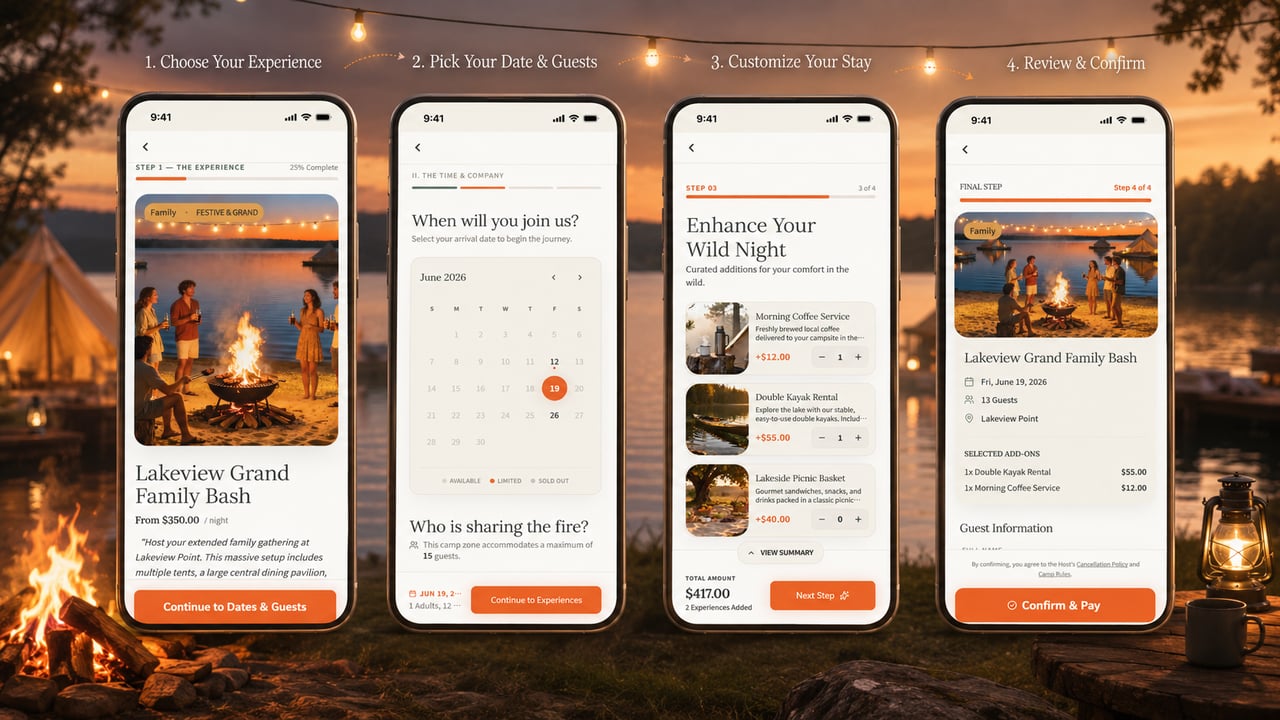
Four phone screens showing the Camp Nights booking journey — choose experience, pick date and guests, customize stay, and review and confirm
The booking journey became simple: choose a camp night, pick a date, select guests, add experiences, and confirm. Instead of asking Daniel for every detail, guests could move through the decision step by step. This changed how Daniel understood the app. It was not only a booking tool. It was a trust system. A visible calendar reduced uncertainty. Clear guest selection reduced back-and-forth messages. Step-by-step progress made the booking feel controlled and safe. Then AutoCoder.cc helped Daniel structure the add-on services. Before, he mentioned extra services casually in messages: barbecue kits, outdoor cinema, sunrise coffee, birthday setups, or photo sessions. Some guests missed them. Some forgot to ask. Some only discovered them after arriving. Inside the app, those services became selectable products. This made the business feel more professional without making it feel cold. Guests could build the weekend they wanted. Daniel could increase order value. And the entire process still felt natural because every add-on belonged to the camping experience. The final confirmation page completed the trust loop. Instead of sending money after a vague message thread, guests could review the date, guest count, location, selected experiences, and total price before confirming. This became Daniel’s third lesson: Customers do not always need more persuasion. They need less uncertainty. Once AutoCoder.cc turned booking into a clean mobile flow, Pine Hollow became easier to trust. Guests no longer had to depend on Daniel’s repeated explanations. They could understand the offer themselves. That was the breakthrough. The app did not only save Daniel time. It made the campsite easier to believe in.

4. Build a Working Version First, Then Let Data Prove the Change

Before the app, Daniel had tried almost every low-cost marketing method he knew.
  • He posted photos on Instagram.
  • He made simple event posters.
  • He shared weekend offers in local Facebook groups.
  • He asked friends to repost his camp nights.
  • He even tried limited-time discounts for slow weekends.
Some of these methods brought attention, but the results were unstable. People clicked, liked, commented, and asked questions. Then many of them disappeared before booking. That was when Daniel understood the real bottleneck. Pine Hollow did not only need more traffic. It needed a faster path from interest to confirmed booking. So when he started with AutoCoder.cc, he did not try to build a huge platform. He broke the business into practical modules: guest registration, campsite information, multi-role login, booking flow, add-on services, gallery display, and Host Mode management. The multi-role structure mattered because Pine Hollow had two sides to serve at the same time: guests who wanted a smooth booking journey, and hosts who needed a reliable way to manage the business behind that journey. That simple structure became the first working version. AutoCoder.cc helped Daniel turn those modules into a usable mobile camping product. Guests could browse camp nights, choose dates, add extras, and confirm bookings. Daniel could manage services, update offerings, organize visuals, review bookings, and operate from the host side without rebuilding the system manually. This was similar to what many great tools have done in other industries. Canva lowered the design barrier for non-designers. Shopify helped small sellers start from their own business logic. AutoCoder.cc gave Daniel a comparable advantage in app creation: it helped a campsite owner turn operating knowledge into a working digital product without becoming a developer first.
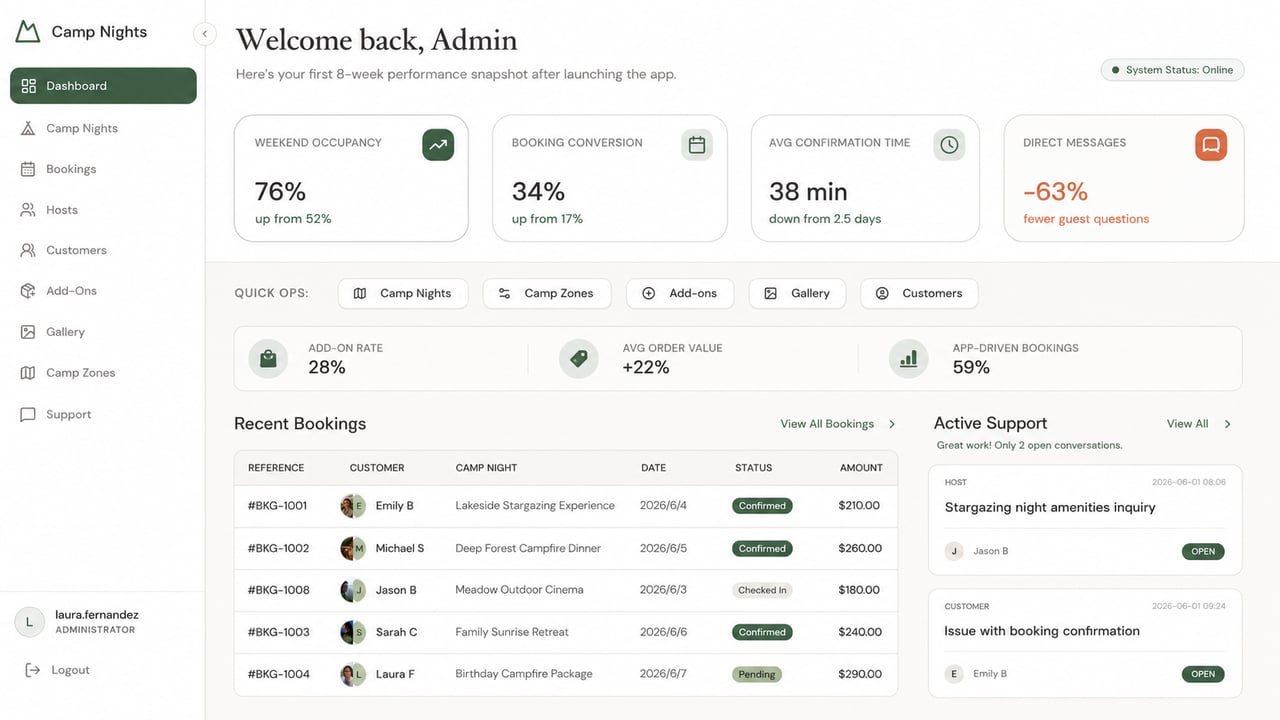
Camp Nights host dashboard showing weekend occupancy 76%, booking conversion 34%, average confirmation time 38 minutes, and recent bookings
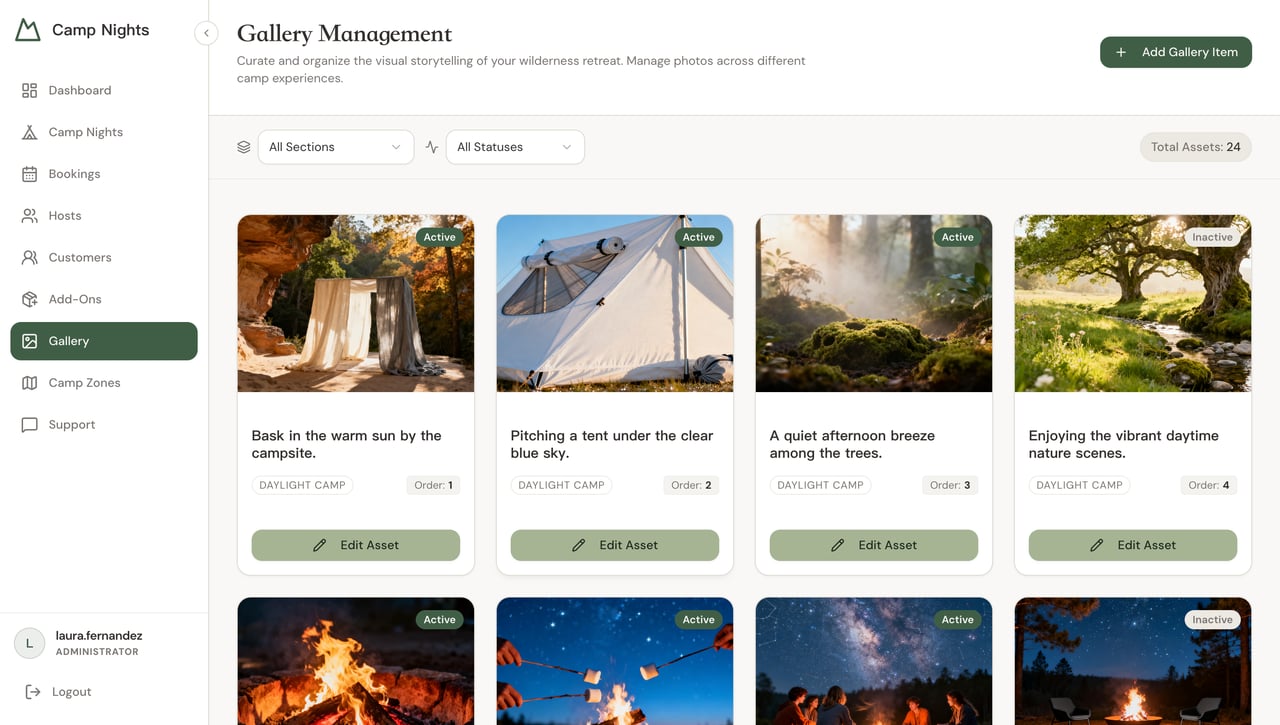
The dashboard was not just a reporting screen. It showed Daniel that the business had become operable from the inside. He could review bookings, track performance, manage support, and understand how guests moved from interest to confirmed reservations. View the Host Dashboard Preview. This changed Daniel’s role again. He was no longer only replying to guests. He was actively designing and managing the business. Host Mode made the operation visible in a way Daniel had never experienced before. Instead of guessing whether the app was working, he could see the business through numbers: weekend occupancy, booking conversion, confirmation speed, message volume, add-on rate, average order value, and app-driven bookings. After the first eight weeks of running the AutoCoder.cc-built product, Daniel compared the new workflow with his old manual records. The change was no longer just a feeling. It showed up in the numbers. Weekend occupancy increased from 52% to 76%. The inquiry-to-booking conversion rate nearly doubled, rising from 17% to 34%. Daniel’s direct-message workload dropped by 63%, because guests no longer needed to ask the same basic questions about dates, guest numbers, package details, or add-on services. The average confirmation time dropped from 2.5 days to about 38 minutes once guests entered the booking flow. Add-on services also became easier to discover: 28% of confirmed bookings included at least one add-on, and the average order value increased by 22%. Most importantly, 59% of confirmed bookings now came through the app-based flow instead of scattered private messages. These numbers were not the result of a bigger advertising budget. Daniel was not suddenly reaching a completely different audience. The difference was that AutoCoder.cc helped him turn attention into action. Pine Hollow had moved from scattered promotion to structured operation. The gallery module also became more important than Daniel expected. Before the app, his campsite photos were scattered across old Instagram posts, folders, and message threads. Some showed tents. Some showed campfires. Some showed quiet daytime scenes. Some showed night skies. But guests could not understand them as one complete experience. Inside the AutoCoder.cc-built system, Daniel could organize those visual assets by section, status, and camp experience. He could decide which photos appeared first, which scenes supported each package, and which images should be updated before the next campaign.
Camp Nights gallery management screen with a grid of campsite photos organized into daylight camp and nighttime scenes
This mattered because Pine Hollow was not selling a generic booking slot. It was selling atmosphere. A clean gallery helped Daniel turn visual materials into part of the sales flow. Daylight camp photos made the site feel safe and open. Forest scenes made the experience feel quiet and natural. Campfire and stargazing images supported higher-value night packages. The gallery was no longer just decoration. It became part of the product structure. That was the practical value of building a working version first. Daniel did not need to predict every feature in advance. Once the AutoCoder.cc version was live, real user behavior showed him what to improve. He could see which camp nights attracted attention, which add-ons were selected, which bookings were confirmed, which questions still appeared in support, and which images helped guests understand the experience faster. For Daniel, the fourth lesson was clear: Do not wait for a perfect platform. Build a usable version first, then let real user behavior show you what to improve. The real value of AutoCoder.cc was not that Daniel suddenly had a mobile app. The real value was that his business logic became visible, clickable, measurable, and repeatable.

5. What This Case Really Proves: Ordinary Businesses Need Productization

Daniel’s story was not about building the most complicated app. It was about discovering that a good offline business can still fail online if the experience is not packaged, trusted, and easy to book. Before AutoCoder.cc, Pine Hollow lived in scattered channels: Instagram photos, Facebook posts, direct messages, spreadsheets, and repeated explanations. The campsite had real value, but that value was not organized into a clear customer journey. Built via AutoCoder.cc, the campsite got a full upgrade. Visitors browse vibes, pick dates, add extras and book directly in-app, while Daniel runs all site updates and services from the host dashboard. Results speak for themselves: in eight weeks, weekend occupancy jumped from 52% to 76%, DM work fell 63%, and nearly 1/3 of bookings included add-ons. Far more than a nicer-looking app, it boosted conversions, streamlined operations and maximized revenue with the same existing space.
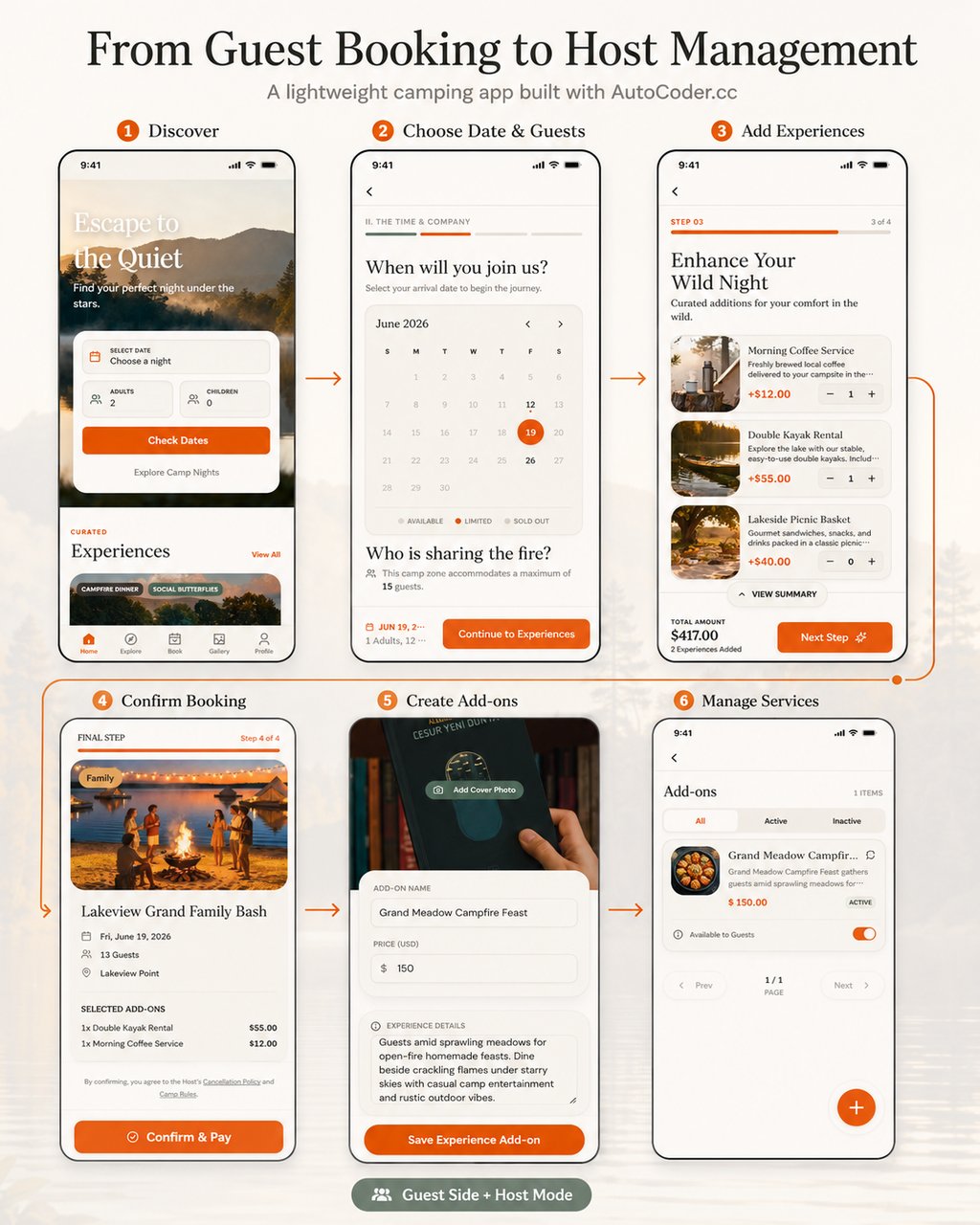
Infographic showing the Camp Nights app flow from guest booking — discover, choose dates, add experiences, confirm — to host management with create add-ons and manage services
This was the real business lesson. Offline resources do not create stable growth if they only stay in social media posts. Customers do not simply buy a “campsite.” They buy a named, visual, and believable weekend experience. Going online is not just about having a beautiful page. It is about connecting trust, choice, booking, add-ons, confirmation, and management into one flow. And this is exactly where AutoCoder.cc became valuable. It helped Daniel turn scattered business knowledge into a structured product flow. His campsite was no longer explained through messages, screenshots, and repeated answers. It became something customers could see, understand, customize, and book by themselves. For ordinary business owners, this is the real meaning of productization: Your service does not only need to exist offline. It needs to be named, packaged, trusted, booked, paid for, and managed through a clear digital flow. AutoCoder.cc gives small operators a lighter way to make that happen. More importantly, it allows them to build not just a page, but a role-based product system: one side for customers to act, and another side for operators to manage, improve, and grow the business. Daniel did not need to become a product manager, designer, or engineer first. He needed to understand his business clearly enough to describe it. AutoCoder.cc helped turn that description into a working app structure. Before, Daniel spent his day answering the same questions:
  • “Which dates are available?”
  • “How many people can join?”
  • “Is barbecue included?”
  • “Can we bring children?”
  • “What happens after we pay?”
Now, guests could answer those questions inside the app. That changed Daniel’s role. He was no longer trapped as a manual customer service agent for his own campsite. He returned to being the operator of the business: designing better camp nights, improving add-ons, watching booking behavior, and planning the next weekend experience. That is why AutoCoder.cc is more than an app-building tool in this case. It is a way for ordinary business owners to productize what they already do well. For campsites, studios, local activities, workshops, clubs, events, and service-based businesses, this is the larger opportunity: If your business is still stuck in social media posts, private messages, manual confirmation, screenshots, posters, and scattered spreadsheets, the next step may not be more advertising. The next step may be productization. AutoCoder.cc helps you take that step. Want to see how this productized campsite works? Explore the Customer App · View the Host Dashboard AutoCoder.cc helps ordinary businesses turn scattered operations into a real product system — one side for customers to book, and another side for operators to manage.