

The Five Things Google Says You Can Stop Doing
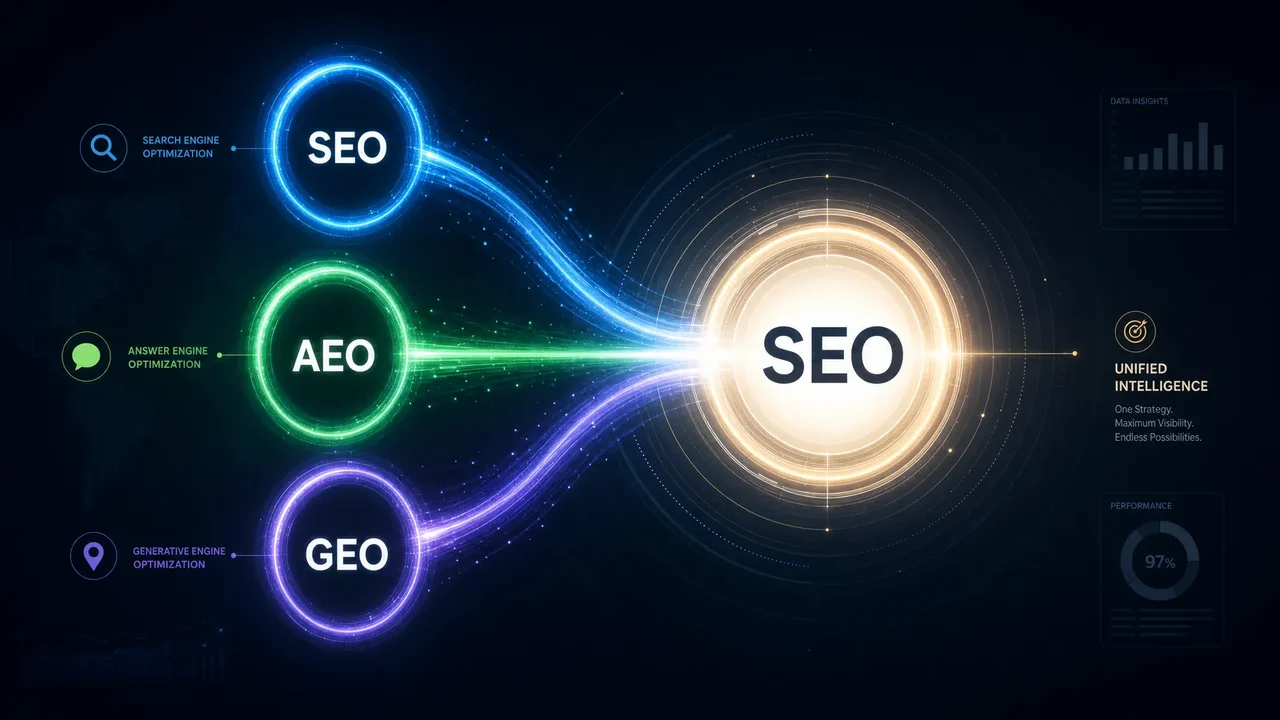
The guide contains a section called “Mythbusting generative AI search,” and it reads like a rebuttal to every AEO/GEO service pitch you have heard in the last eighteen months. Google names specific tactics and says, directly, that site owners can ignore them. Not “consider deprioritizing.” Ignore. llms.txt and special markup. Google says you do not need to create machine-readable files, AI text files, specialized markup, or Markdown versions of your pages to appear in generative AI search. It acknowledges that Google can discover and index many file types beyond HTML, but that does not mean those files receive special treatment. If someone sold you on llms.txt as a ranking signal for Google’s AI features, you now have Google’s own documentation to cite when you ask for your money back. Content chunking. The idea that you need to break your content into small, digestible pieces optimized for AI consumption has been one of the most persistent recommendations in GEO guides. Google’s response is unambiguous: there is no requirement to chunk content. Its systems “are able to understand the nuance of multiple topics on a page and show the relevant piece to users.” Danny Sullivan had already hinted at this in January 2026, telling practitioners that Google engineers recommended against chunking. Now it is official. Rewriting content for AI systems. You do not need to capture every long-tail keyword variation, nor write in a specific way tailored to generative AI search. Google’s AI features understand synonyms, semantic relationships, and general meaning. The content you wrote for humans, assuming it is good, already works for AI. Inauthentic mentions. A growing number of GEO services have promoted the idea that getting your brand mentioned across blogs, forums, and videos is the key to appearing in AI-generated answers. Google’s guide acknowledges that AI features can surface what is said about your products and services across the web, but it warns that seeking inauthentic mentions “isn’t as helpful as it might seem.” Core ranking systems focus on quality, and spam detection mechanisms are designed to catch manufactured signals. Paying for mentions on low-quality sites is not a shortcut — it is a risk. Special structured data for AI search. There is no special schema.org markup to add for generative AI features. Google recommends continuing to use structured data as part of an overall SEO strategy for rich results eligibility, but it does not factor into AI Overviews or AI Mode visibility. If you added FAQ schema hoping it would boost your AI citations, Ahrefs has its own data on how that worked out — a study of 1,885 pages that added JSON-LD schema found no meaningful increase in AI citations, with AI Overviews actually showing a 4.6% decline relative to controls.citation Taken together, these five points represent something unusual in Google’s communication history: a preemptive strike against an optimization industry that had already formed before the rules were written. Google is not just saying these tactics are unnecessary. It is saying the entire conceptual framework — that AI search requires a fundamentally different optimization discipline — is wrong.What Google Actually Wants You to Do
If the mythbusting section is a list of what not to do, the rest of the guide is a list of what has always worked. Google’s AI features are “rooted in our core Search ranking and quality systems,” relying on retrieval-augmented generation (RAG) and query fan-out to surface content from the same Search index that powers traditional results. AI Mode and AI Overviews do not run on a separate index. The signals that determine whether your content appears in an AI Overview are largely the same signals that determine whether it ranks in traditional search. The single most important concept in the guide is non-commodity content. Google draws a contrast between content anyone could produce — its example is “7 Tips for First-Time Homebuyers” — and content only you could produce: “Why We Waived the Inspection and Saved Money: A Look Inside the Sewer Line.” The distinction is not about topic. It is about whether the content provides unique insight beyond what is already common knowledge. In a world where AI can generate infinite generic summaries, the only thing that resists commoditization is genuine human perspective, experience, and expertise.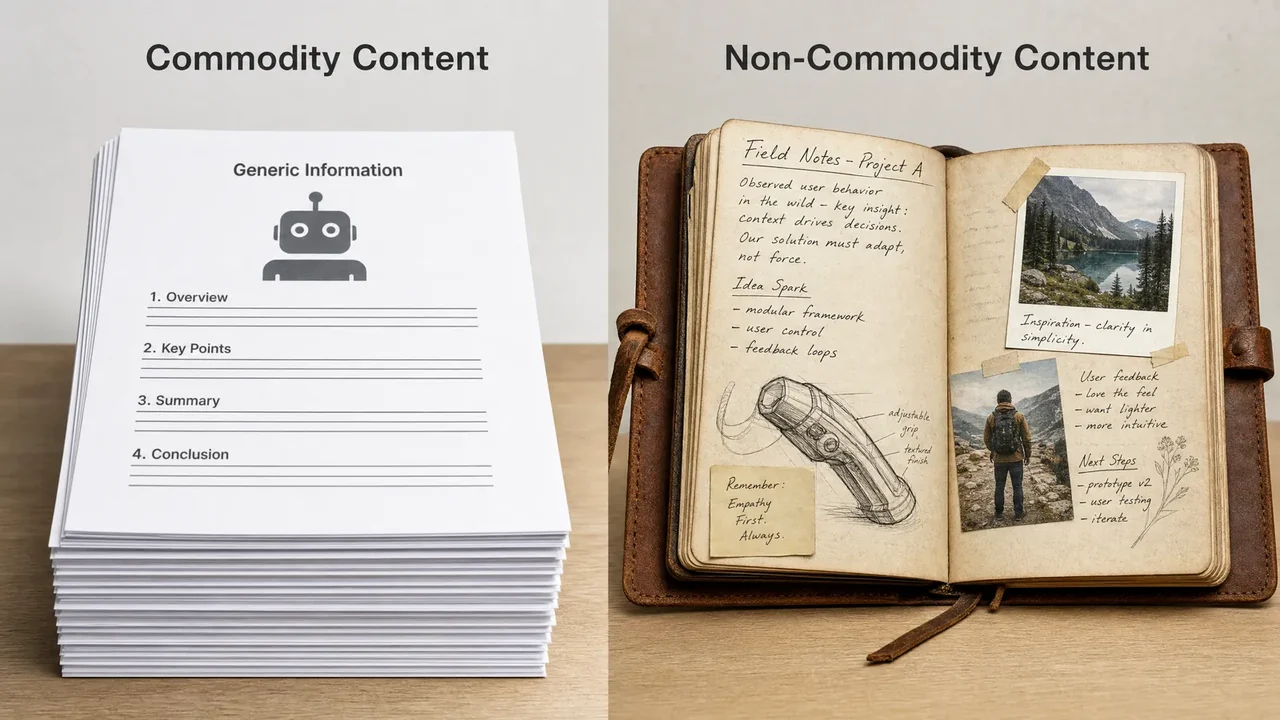
The Data That Makes This Conversation Urgent
Google is publishing this guide now because the numbers have become impossible to ignore. According to data from SEO.com, 48% of Google searches in March 2026 already displayed an AI answer at the top of the page, up from 34.5% in December 2025.citation AI Mode reached 100 million monthly active users across the US and India in Q1 2026, more than doubling from 75 million in December 2025. The platform now processes over a billion queries per month. But it is the click-through data that explains why publishers and SEO practitioners are nervous. Seer Interactive analyzed 25.1 million impressions and found that 93% of AI Mode sessions end without a single click to a source website.citation Users read the AI-generated answer and close the tab. SparkToro and Datos clickstream data from 2026 puts the overall zero-click rate on Google at 65%, rising to 83% when AI Overviews appear on the page. In B2B tech specifically, BrightEdge reported in February 2026 that 82% of tech queries now trigger an AI Overview — double the 36% rate from a year earlier.citation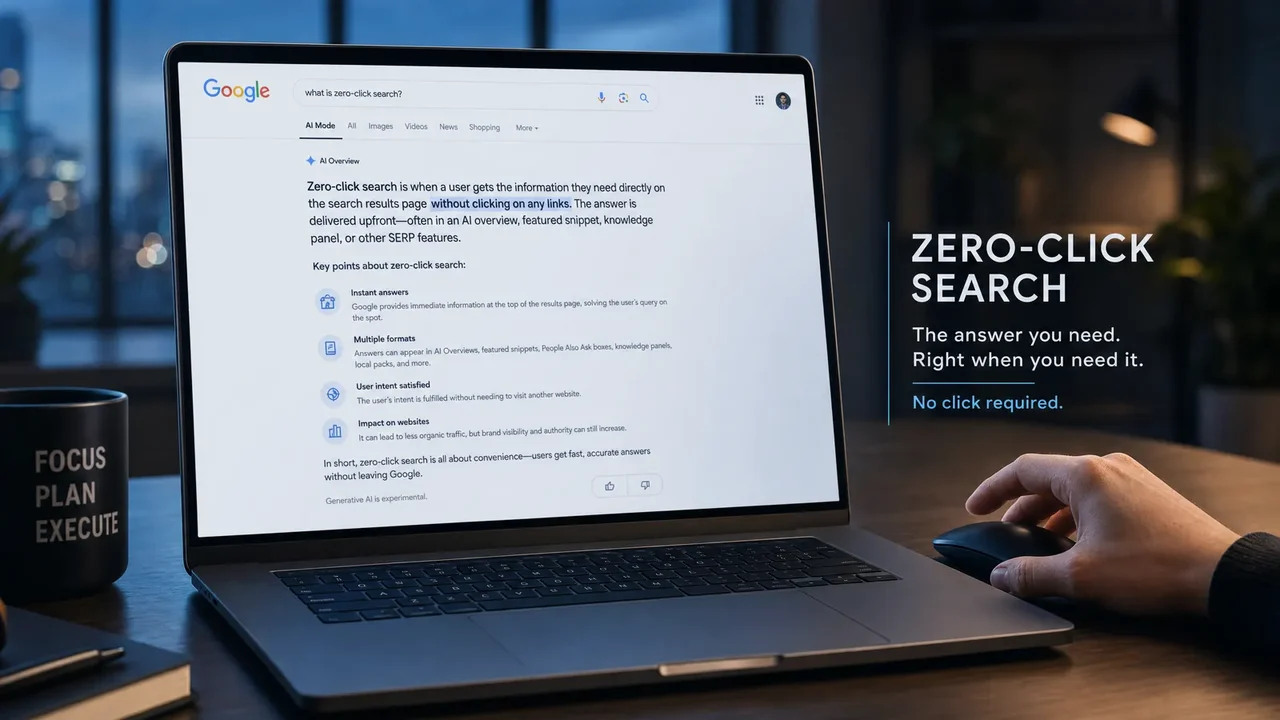
What This Means for SEO Practitioners
The practical implications of Google’s guide fall into three buckets. First, audit your agency relationships. If you are paying a separate line item for GEO or AEO services that consist of tactics Google has now explicitly disavowed — llms.txt creation, content chunking, schema-for-AI optimization, mention-building campaigns — you have a documented reason to ask hard questions. Google’s own words are now on the record. A growing number of industry commentators have framed this as Google effectively killing the AEO/GEO services market, and while that framing is provocative, the underlying question is legitimate: what exactly are you paying for if Google says the optimization target is the same as it has always been?citation Second, reallocate content resources toward non-commodity work. Google’s non-commodity content framing is the closest thing to a new directive in the entire guide, and it deserves serious attention. Generic how-to articles, listicles, and definitional content that AI can reproduce effortlessly are not going to drive visibility in an AI-first search experience. Original research, first-person case studies, expert interviews, proprietary data, and content that reflects genuine lived experience — these are the formats that cannot be replicated by an LLM. If your content strategy still revolves around capturing long-tail informational queries with templated articles, the economics of that approach are deteriorating faster than most teams have internalized. Third, do not confuse Google’s position with the whole market. Google’s guide is authoritative for Google Search. It says nothing about ChatGPT, Perplexity, Claude, or any other AI platform that may weight signals differently. Several of the tactics Google dismisses — particularly llms.txt and structured content formats — may have genuine utility on non-Google platforms where crawling and indexing infrastructure is less mature. The guide itself implicitly acknowledges this by specifying that its recommendations apply to “Google Search.” Smart SEO practitioners will maintain a diversified understanding of AI search visibility rather than treating Google’s documentation as the final word on every platform.The Deeper Message
There is something almost disorienting about reading Google’s AI optimization guide. After two years of conference talks, agency pitch decks, LinkedIn think pieces, and an entire ecosystem of tools built around the premise that AI search requires fundamentally new optimization approaches, Google’s official position is that it does not. Good crawlability, quality content, genuine expertise, and technical hygiene — the same checklist SEO practitioners have been working from for years — are, Google says, what drives visibility in AI Overviews and AI Mode. The SEO industry has a long history of generating optimization panics that fail to materialize into mandatory practice changes. Mobile-first indexing, voice search optimization, social signals — each of these was, at some point, positioned as the thing that would fundamentally transform SEO and require an entirely new skillset. In each case, the transformation was real, but the fundamentals held. Google’s AI search guide is making the same argument about AEO and GEO: the transformation is real, but the fundamentals hold. Whether you find that position credible depends on how you interpret the data. The argument for continuity is that Google’s AI features run on the same index, the same ranking systems, and the same quality signals as traditional search, so optimizing for them is optimizing for search. The argument against continuity is that a search experience where 93% of AI Mode sessions produce zero clicks is not the same product as the ten-blue-links search experience SEO was built to optimize for, regardless of what infrastructure runs underneath it. Both arguments have merit. But Google has now made its position official, and for practitioners whose work targets Google Search specifically, that position is the closest thing to a rulebook the AI search era has produced. The guide’s closing section is almost disarmingly modest: it says you do not need to accomplish everything in the document to succeed, and that “plenty of content thrives in Google Search (including generative AI experiences) without any overt SEO at all.” The document that named AEO and GEO and called them SEO ends by suggesting you might not need SEO at all. In its own way, that is the most honest thing in it.This article is based on Google’s official documentation “Optimizing your website for generative AI features on Google Search,” published May 15, 2026, and related industry coverage and data.