From Match-Night Chaos to a Multi-Role Booking System with AutoCoder.cc cover

I Used AutoCoder.cc to Build a Match-Night Operating System, Not Just a Bar Website

I used AutoCoder.cc to build a World Cup bar website that does more than display beer photos, football screens, and crowd scenes. This AI-built website separates the customer portal from the bar owner portal, lets guests reserve match-night packages and seats, and gives me a backend to manage bookings, matches, packages, and activities. In other words, Goal & Glass is not just a bar homepage. It is a sports bar booking website with a real business flow behind it. I run a bar built around football nights. During a major international football season, customers are not only looking for drinks. They want to know which matches are on, what packages are available, where they can sit, what activities will happen, and whether their reservation is confirmed. Before this site, that information was scattered across phone calls, private messages, paper notes, staff memory, and temporary spreadsheets. It worked on quiet nights, but it became fragile when a major match brought in more guests, more questions, and more last-minute changes.
The real problem was not that I needed a prettier website. The real problem was that my match-night business flow was too scattered.
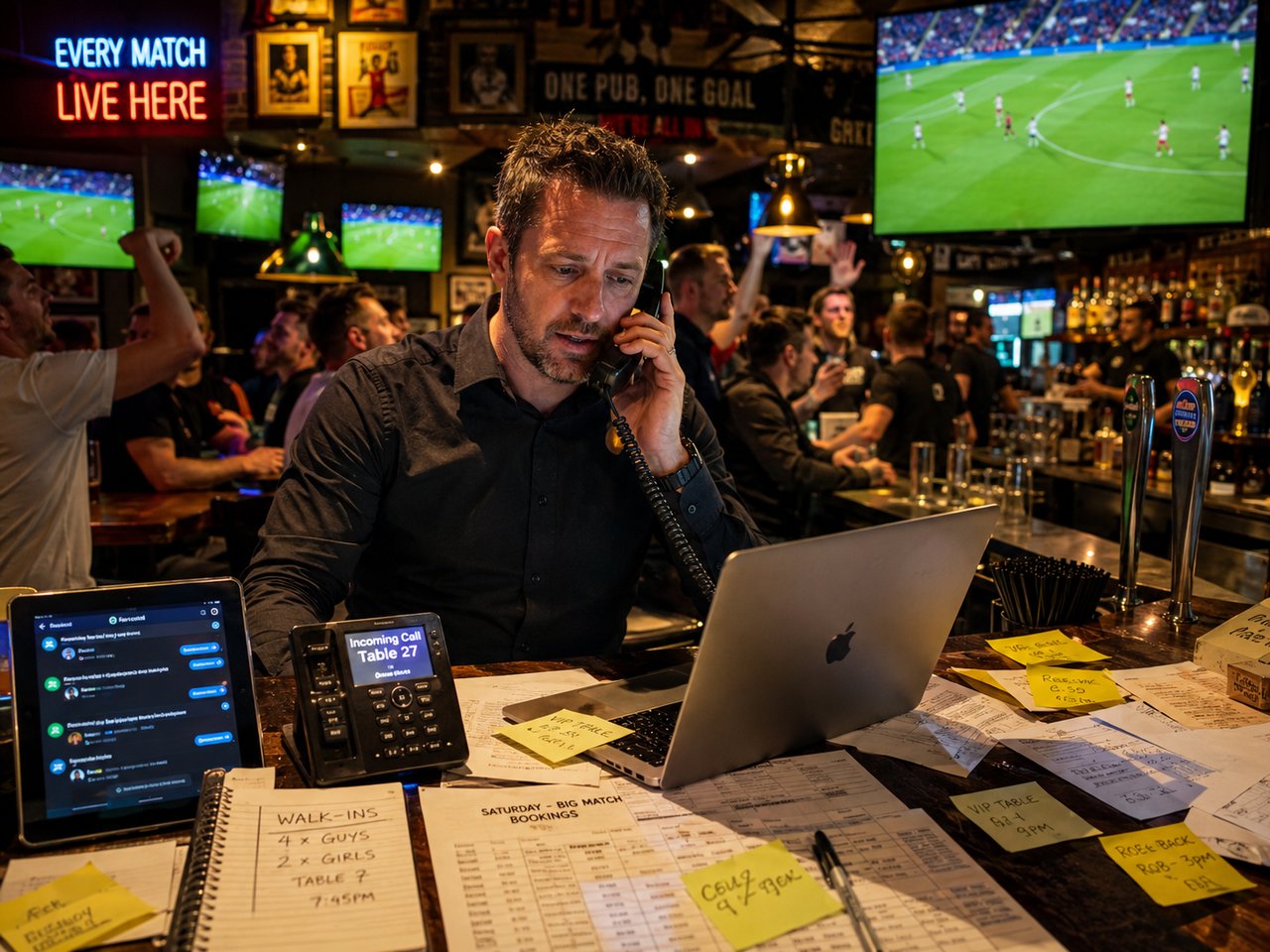
Sports bar owner on a phone call surrounded by sticky notes, a paper booking ledger, an iPad, and a laptop during a busy match night
That was the starting point for Goal & Glass. I did not want a digital brochure. I wanted a system where guests could understand the night, make a decision, and reserve without waiting for my staff to reply manually.
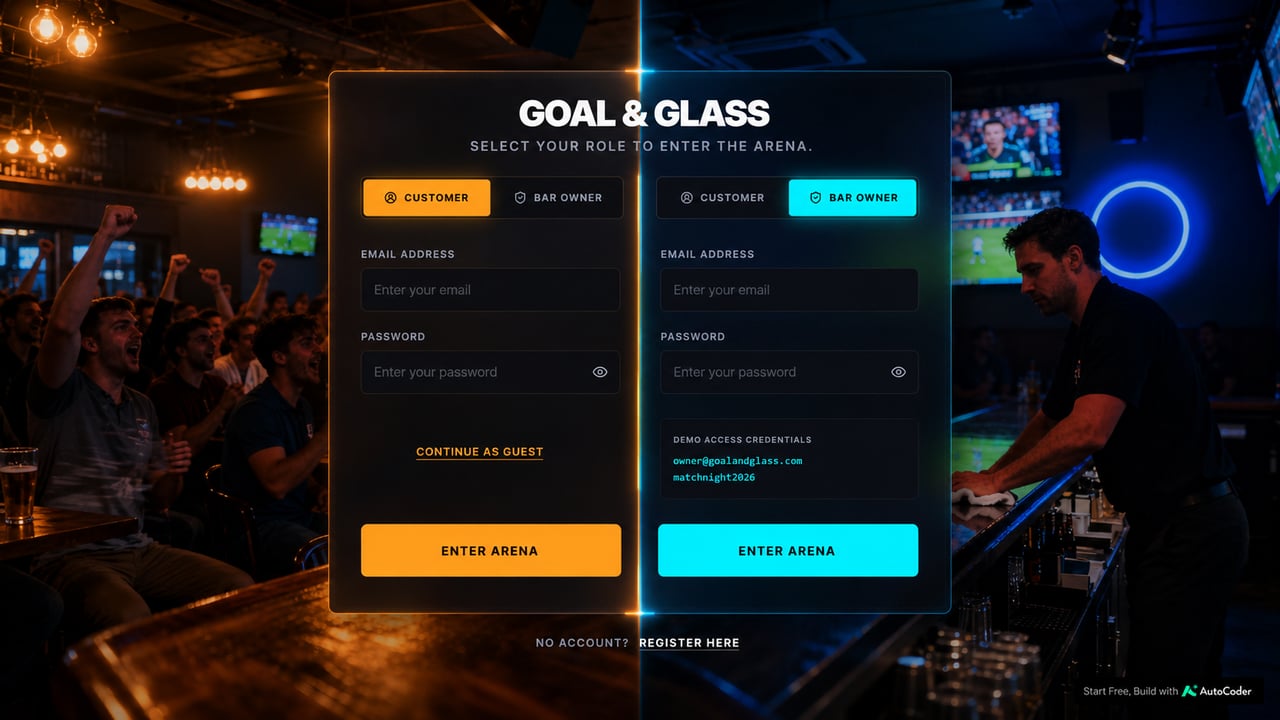
Goal & Glass role-select login screen with Customer and Bar Owner tabs side by side, email and password fields, and a Continue as Guest option
Before AutoCoder.ccAfter AutoCoder.cc
Bookings lived in messages, calls, and paper notes.Bookings moved into a structured online flow.
Customers had to ask staff for match details, packages, seats, and confirmation.Customers could check matches, packages, seats, and booking status by themselves.
Staff relied on memory and temporary spreadsheets.The owner could manage bookings, matches, packages, and activities from one backend.
The website would have been only a visual homepage.The site became a match-night operating system.
A real business website has more than one user. Customers need speed. Owners need control. AutoCoder.cc helped me build both sides in one project.

The Customer Portal Had to Turn Match-Night Excitement into a Booking

The customer side of Goal & Glass had one job: move people from interest to reservation without making them think too much. A football night is emotional, but booking a table should be simple. Guests should immediately understand what kind of night this is, what they can book, where they can sit, and what happens after they submit their reservation.
Customer StepWebsite Job
AtmosphereShow the football bar energy immediately.
PackageTurn food, drinks, and seats into clear offers.
SeatLet guests choose where they want to watch the match.
BookingCollect clean reservation details.
StatusConfirm the booking and reduce uncertainty.
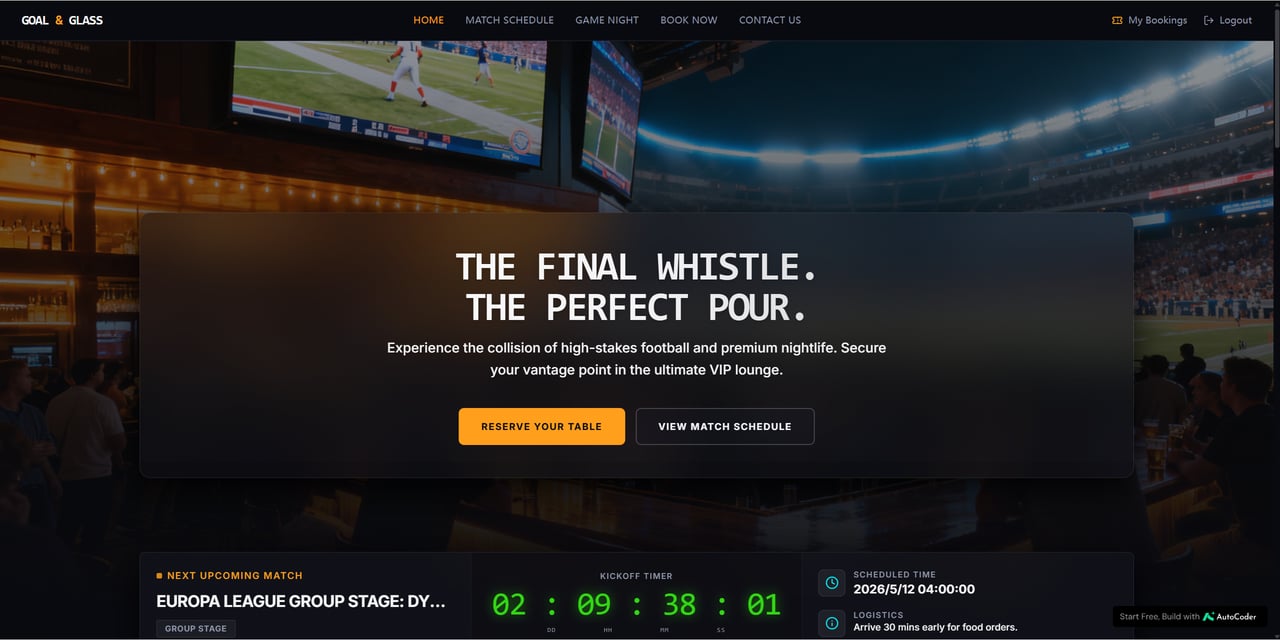
Goal & Glass homepage with The Final Whistle The Perfect Pour hero headline, Reserve Your Table and View Match Schedule buttons, and a next upcoming match countdown panel
The homepage creates instant context. The dark bar interior, football broadcast screens, stadium lighting, and match-night language tell customers what Goal & Glass is before they read every line. This is not decoration. It reduces the time between “this looks interesting” and “I know what to do next.”
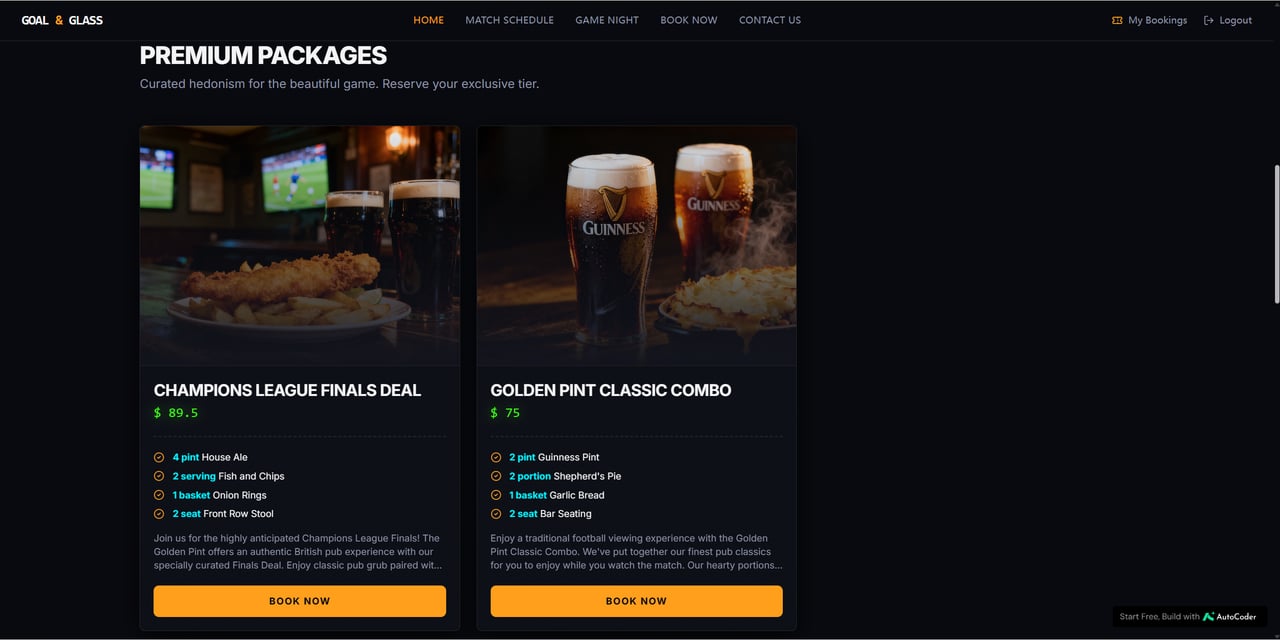
Goal & Glass Premium Packages screen with Champions League Finals Deal at 89.5 and Golden Pint Classic Combo at 75, each listing pints, food portions, and seat type with Book Now buttons
The package cards turn a scattered bar order into a clear product. Customers no longer need to ask what is included, how many drinks come with it, whether food is part of the deal, or whether the price works for their group. This is where the site starts to behave like a sports bar booking website, not just a visual homepage.
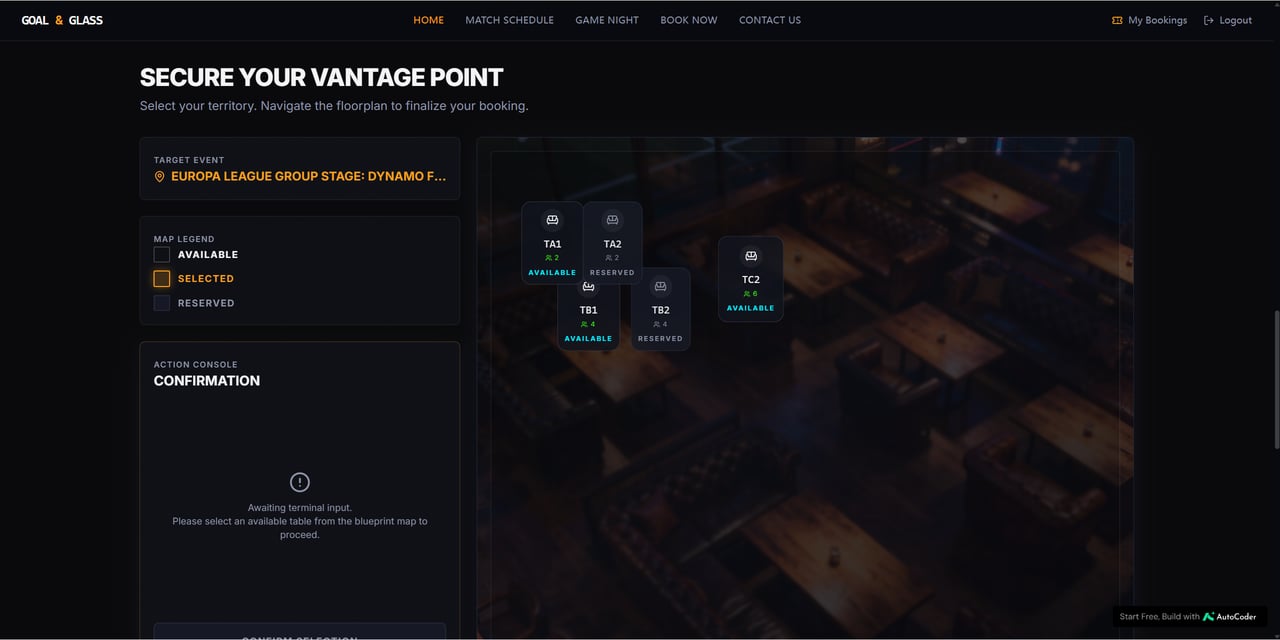
Goal & Glass Secure Your Vantage Point screen with a target event panel, map legend for Available, Selected, and Reserved tables, and an interactive blueprint of bar seating
For match night, a seat is not just a seat. It is the customer’s view of the screen, distance from the bar, position in the room, and group experience. The interactive seat map changes the question from “Do you have space?” to “Where do I want to watch the match?”
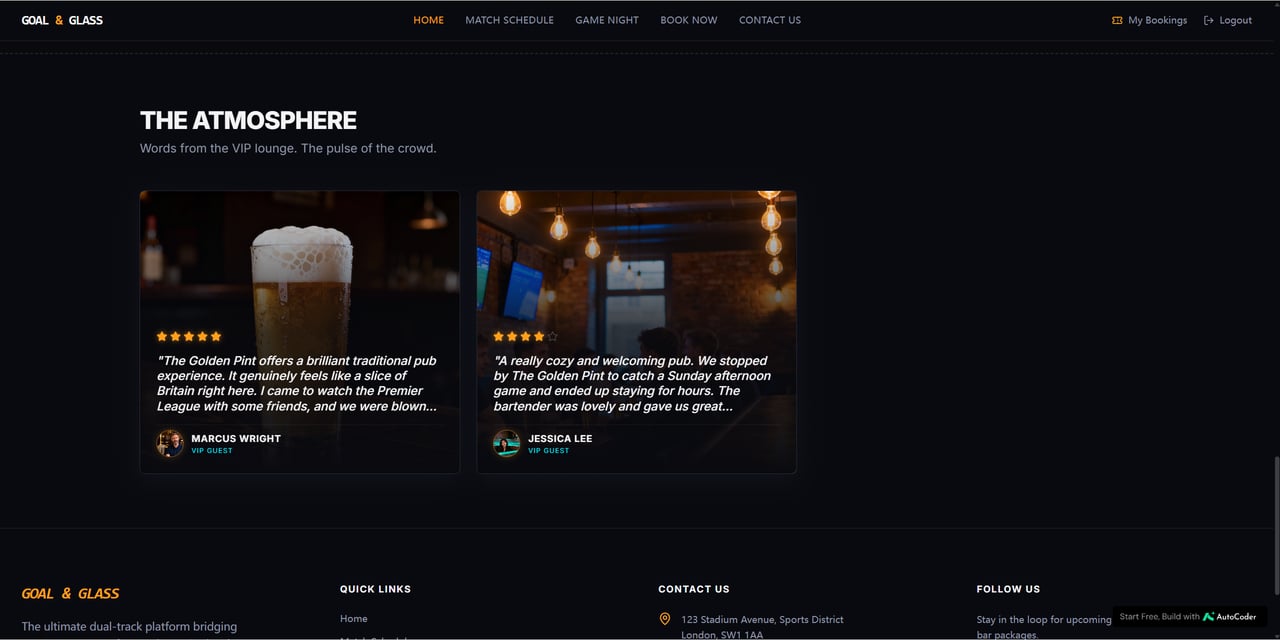
Goal & Glass The Atmosphere section with two five-star testimonial cards from Marcus Wright and Jessica Lee describing the football bar experience
The booking form turns intent into a real reservation. Customers can choose the match, enter their contact details, party size, arrival time, and special notes. For the guest, this is faster than a back-and-forth message. For the bar, it creates cleaner information than scattered chats.
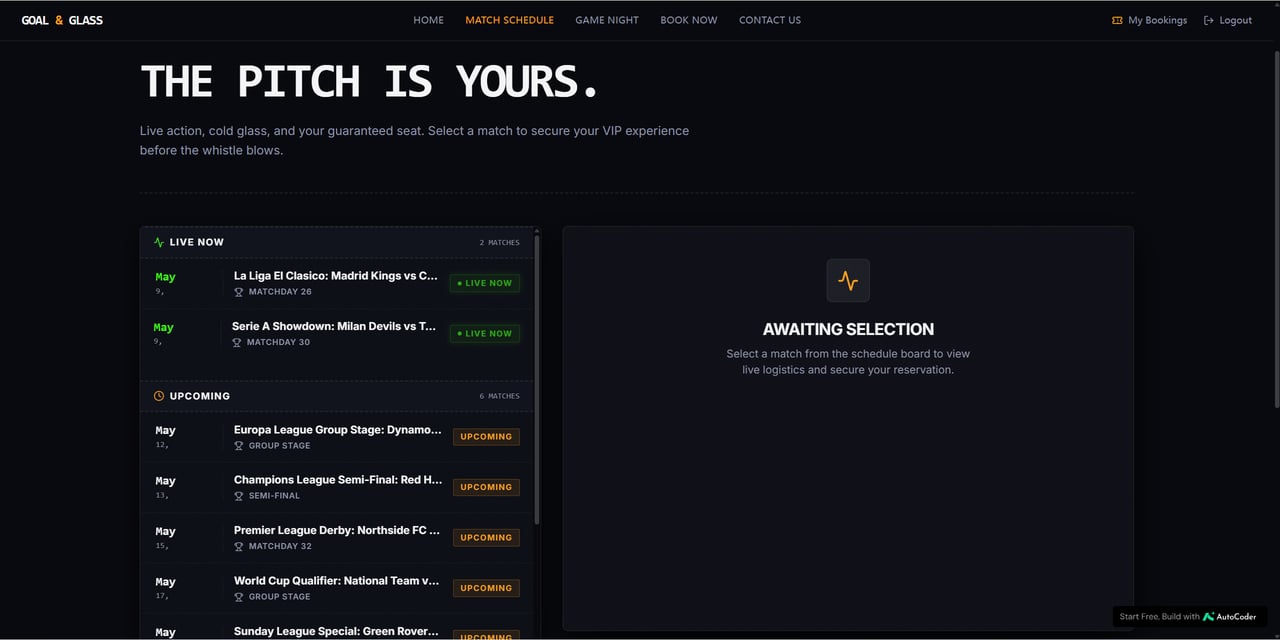
Goal & Glass The Pitch Is Yours match schedule screen with Live Now and Upcoming match lists including La Liga El Clasico, Serie A, Europa League, Champions League Semi-Final, and Premier League Derby
After booking, customers still need confidence that the reservation exists. The status page lets them review upcoming fixtures and reservation details without asking staff again. That is why the customer portal works as a conversion path, not a collection of pages. The design gets attention, but the flow turns attention into reservations.

Match-Day Content Turned the Website into an Experience, Not Just a Booking Tool

A World Cup bar website cannot stop at table reservations. People do not come to a sports bar only because there is a screen. They come for the crowd, the noise, the shared reactions, the food, the drinks, and the feeling that the night has been designed around the match.
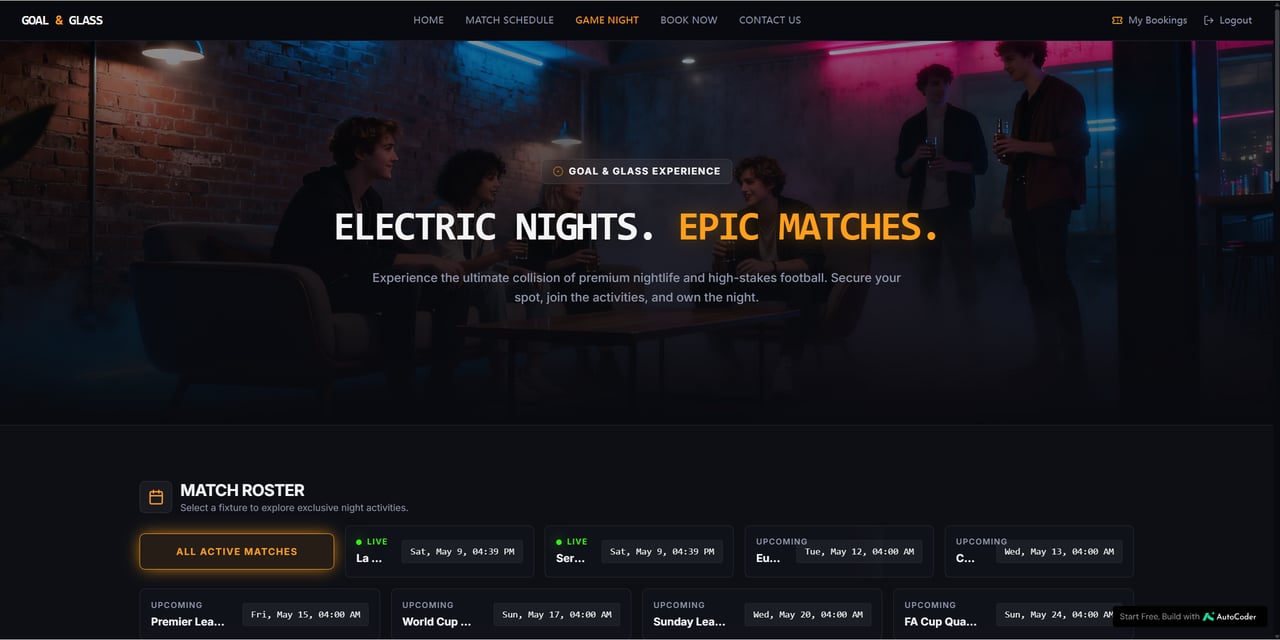
Goal & Glass Game Night page with Electric Nights Epic Matches hero headline and a match roster showing live and upcoming Premier League, World Cup, Sunday League, and FA Cup fixtures
The match schedule gives customers a reason to return before they even book. They can see which games are live, which matches are coming next, and which nights are worth planning around. For a bar owner, every match night is a separate business opportunity. Some games need premium packages. Some need group seating. Some need early arrival reminders. Some need activities that keep people in the venue before, during, and after the match.
The schedule turns the website into a planning tool. It helps customers answer one question: Which football night should I book?
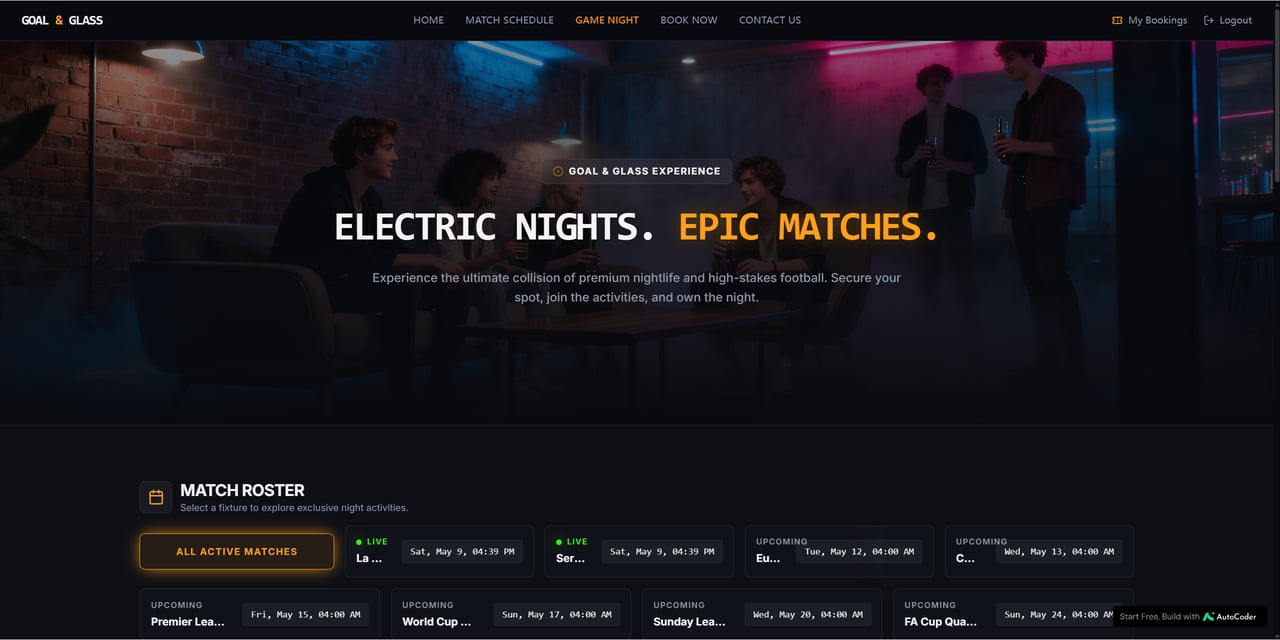
Goal & Glass Game Night page zoomed view showing the Electric Nights Epic Matches hero with a full match roster card grid below for La Liga, Serie A, Europa League, Champions League, Premier League, World Cup, Sunday League, and FA Cup fixtures
The Game Night page packages the football bar as a full event, not just a place with drinks. Neon lighting, dark lounge atmosphere, group scenes, and large match-night headlines make the page feel closer to an event campaign than a restaurant page.
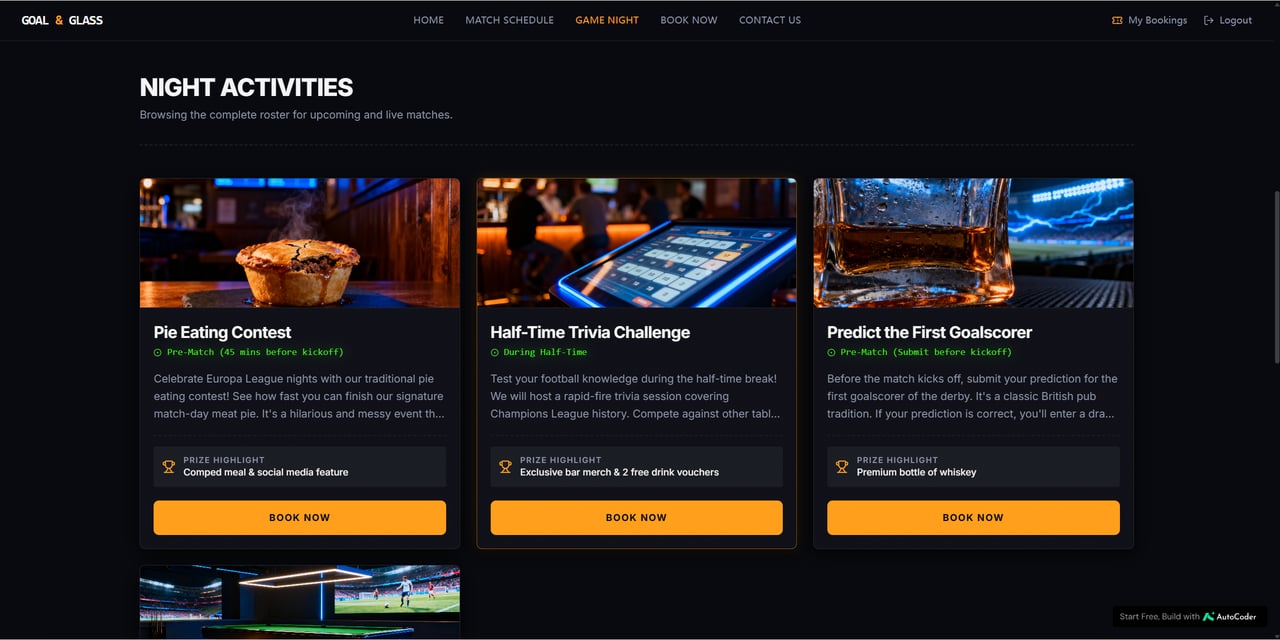
Goal & Glass Night Activities screen with Pie Eating Contest, Half-Time Trivia Challenge, and Predict the First Goalscorer cards, each showing timing, description, prize highlight, and a Book Now button
ActivityBusiness Purpose
Pie Eating ContestWorks as a pre-match warm-up and gives customers a reason to arrive before kickoff.
Half-Time Trivia ChallengeKeeps the room active during half-time instead of letting attention drop.
Predict the First GoalscorerCreates anticipation and gives customers something to discuss before the match starts.
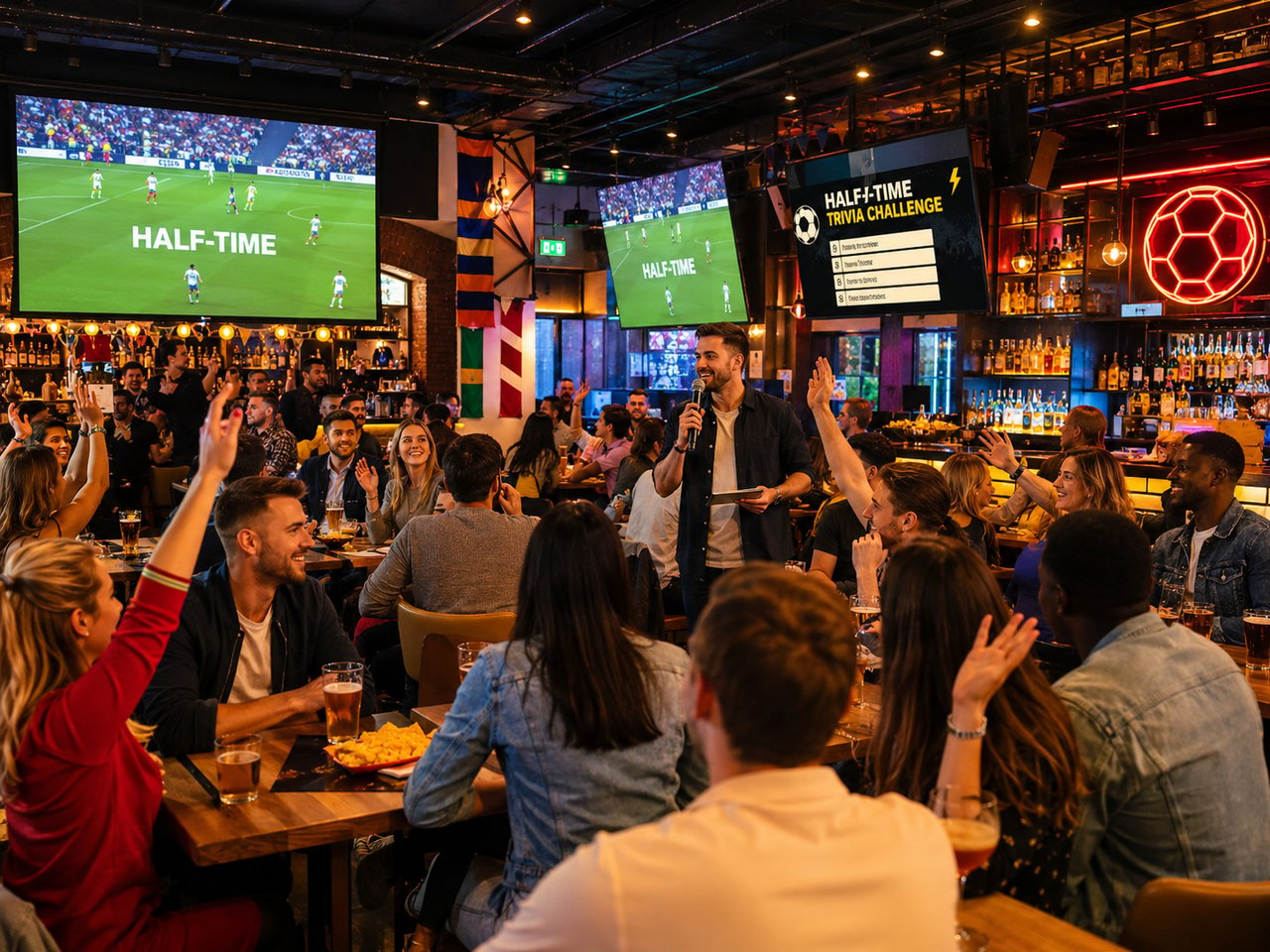
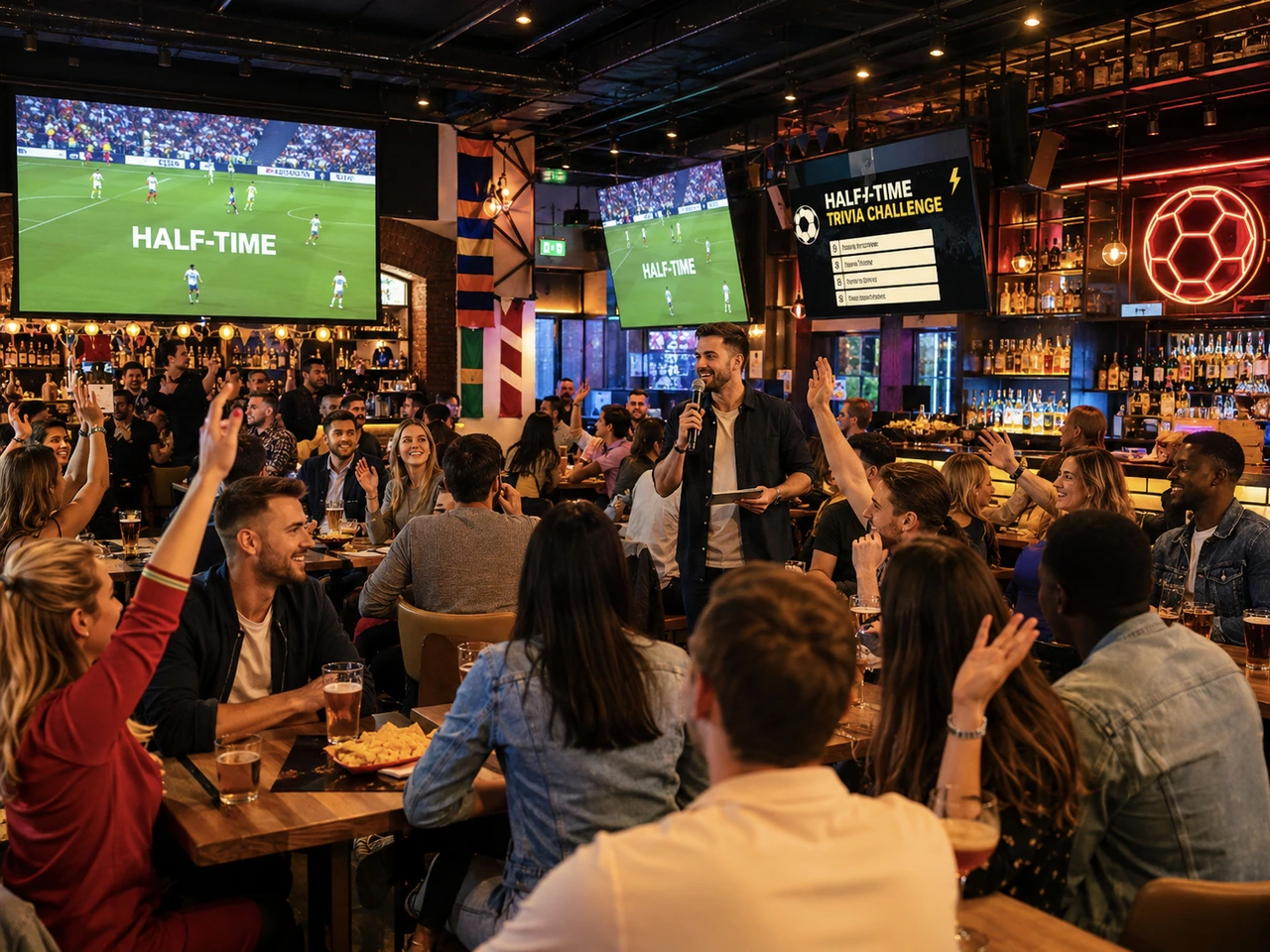
Half-time scene inside a busy sports bar with raised hands, a host holding a microphone, multiple match screens showing Half-Time, and a Half-Time Trivia Challenge leaderboard on the wall
This is where the website becomes more than a sports bar booking website. It becomes a match-night experience system. The booking flow gets customers through the door. The activities help shape what happens once they are inside. For a bar owner, that difference matters. A reservation fills a seat. An experience increases the chance that customers stay longer, order more, bring friends, and return for the next fixture. For this kind of AI-built website, match-day content is not decoration. It is part of the business model.

The Owner Portal Proved the Website Was More Than a Homepage

The owner portal was the part that changed how I understood AI website builders. A homepage can attract customers. A booking form can collect interest. But a backend is what makes the website useful after the first visit. If I cannot manage matches, update packages, check reservations, or adjust the customer-facing experience, the site is still only a polished front window.
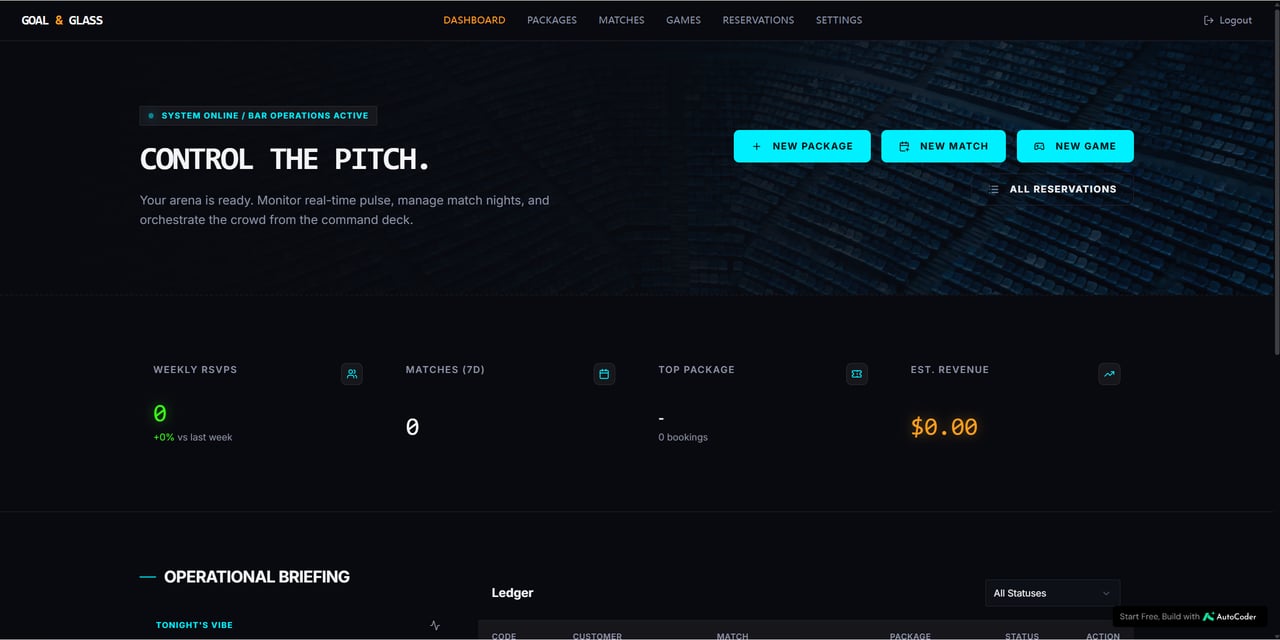
Goal & Glass owner Control the Pitch dashboard with stat cards for Weekly RSVPs, Matches in last 7 days, Top Package, and Est Revenue, plus New Package, New Match, New Game buttons and an operational briefing ledger
The dashboard gives me a command center for the bar. I can check weekly RSVPs, match activity, top packages, estimated revenue, operational notes, and shortcuts for creating new packages, matches, or games. That is the first proof that this is not a normal restaurant website. It gives the owner control, not just visibility.
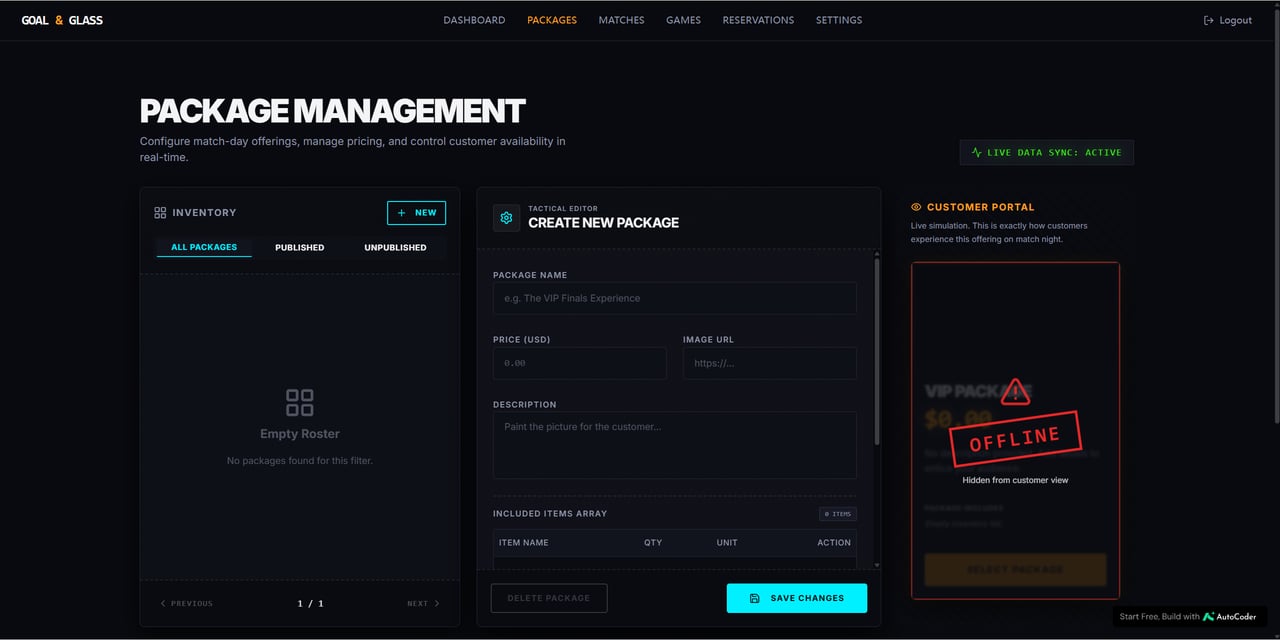
Goal & Glass owner Package Management screen with an inventory panel, a Create New Package form including name, price, image URL, description, and included items array, and a live customer-portal preview on the right
Packages are one of the most important parts of a sports bar business during football season. A high-demand match may need a premium table package. A quieter weekday game may need a lower-entry offer. The owner portal lets me create and adjust those offers without rebuilding the customer-facing website every time. I can edit the package name, price, image, description, and included items. More importantly, I can preview how the package will appear to customers.
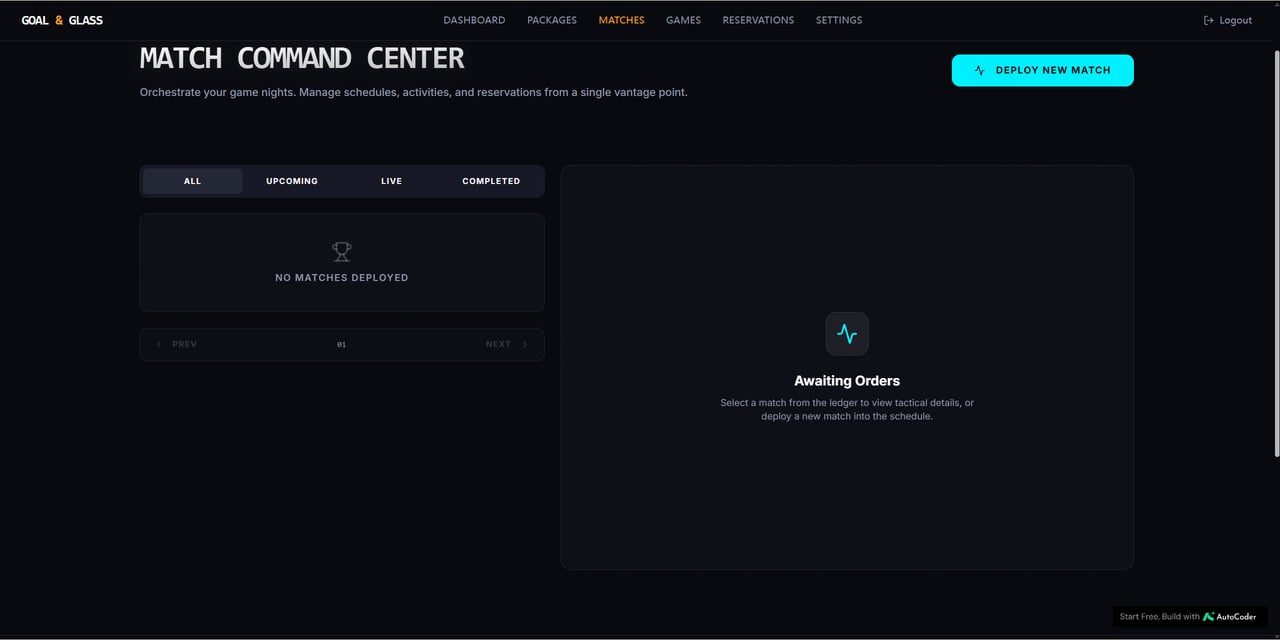
Goal & Glass owner Match Command Center screen with All, Upcoming, Live, and Completed filter tabs, a No Matches Deployed empty state, and a Deploy New Match button
A major football season is not one event. It is a sequence of match nights, each with its own timing, demand, audience, and atmosphere. The Match Command Center gives me a place to manage that sequence. I can treat upcoming, live, and completed matches differently, instead of treating every booking as an isolated request. Reservation control answers the practical questions that decide whether a busy night runs smoothly:
Owner QuestionWhy It Matters
Who booked?Helps staff identify confirmed guests.
Which match did they choose?Connects each reservation to the right event.
How many guests are coming?Supports seating and service planning.
When will they arrive?Helps manage rush periods.
Has the booking been confirmed?Reduces operational uncertainty.
Did they leave special requests?Helps staff prepare before guests arrive.
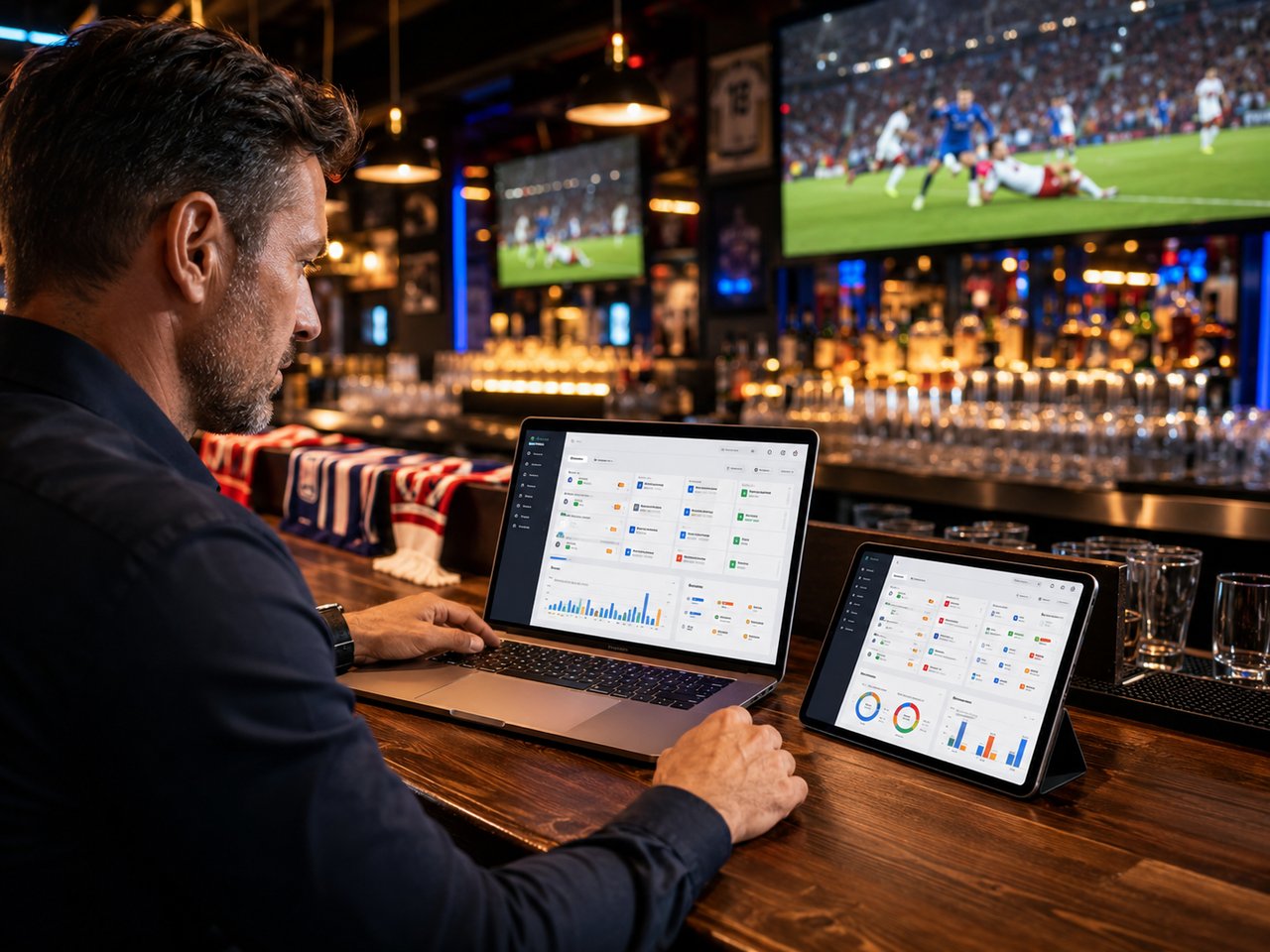
Bar owner working at the counter with a laptop and a tablet open side by side, both showing colorful Goal & Glass admin dashboards, with football matches playing on screens in the background
The customer portal helps people move toward a reservation. The owner portal helps me manage what happens before and after that reservation. Together, they create a two-sided system: one side built for speed, the other built for control.
A good-looking homepage shows that AI can design. A working owner portal shows that AI can help build a business flow.

From Homepage Generation to Business Flow Generation

Building Goal & Glass changed how I think about AI-built websites. Before this project, I mostly saw an AI website builder as a faster way to create a polished homepage: better layout, stronger visuals, cleaner sections, clearer buttons, and a stronger first impression. That still matters. A World Cup bar website has to feel like match night the moment someone opens it. Customers need to see football, nightlife, crowd energy, beer, screens, and a reason to book. But after building this project with AutoCoder.cc, the more important lesson was not about the homepage. It was about the flow behind the homepage.
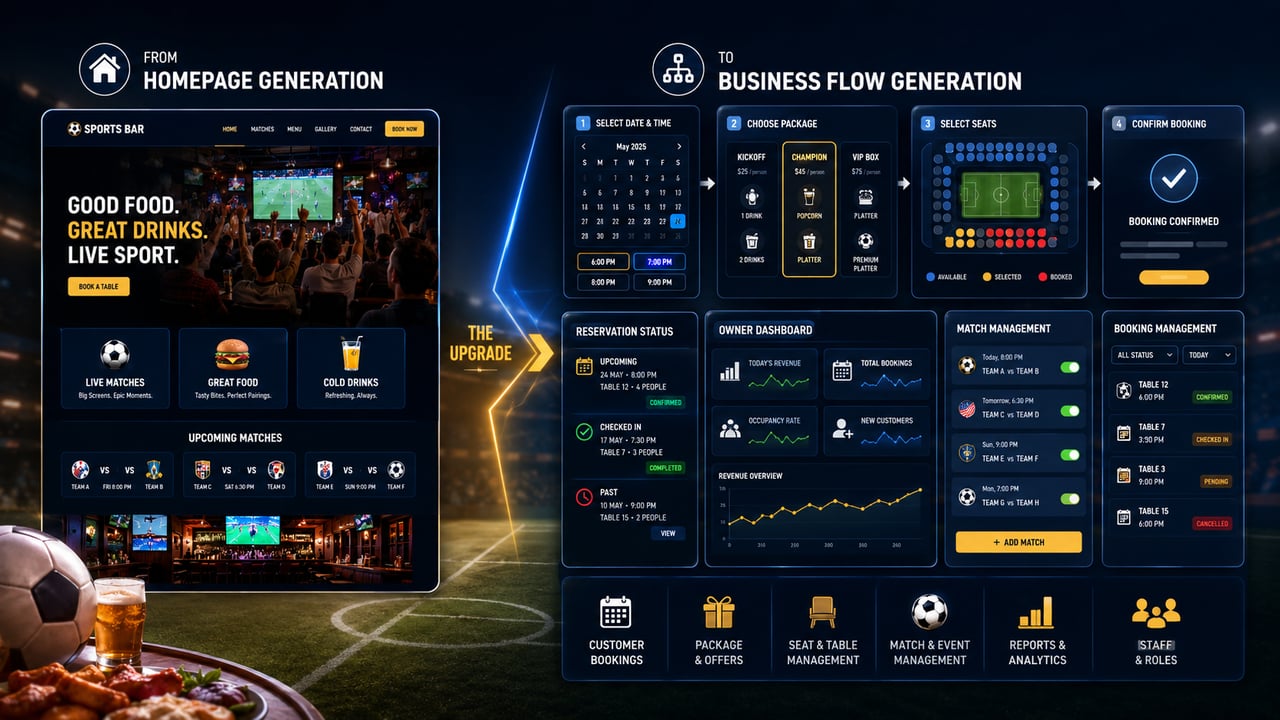
Comparison infographic with From Homepage Generation on the left showing a sports bar homepage, and To Business Flow Generation on the right showing booking steps, reservation status, owner dashboard, match management, and booking management screens connected as one flow
Goal & Glass became useful because each part of the website connected to a real business action.
Website PartBusiness Action
Customer portalHelps guests feel the atmosphere, choose a package, select a seat, submit a booking, and check status.
Match-day contentTurns each football night into a full experience, not just a viewing slot.
Owner portalLets the bar manage packages, matches, activities, and reservations from the business side.
The complete chain matters more than any single screen:
Role selection → Customer homepage → Match schedule → Package browsing → Seat selection → Booking form → Booking status → Owner dashboard → Package control → Match control → Reservation management
This is the difference between a website that only looks finished and a website that can actually support a small business process. For a bar, restaurant, event space, studio, class provider, or local service business, this is where AI-built websites become more interesting. The value is no longer just speed. It is the ability to test a real online business flow before spending months on development. Goal & Glass started as a World Cup bar website, but it showed me something bigger: AI website building is moving from homepage generation to business flow generation. Ready to build a multi-role booking system that fits how your venue actually runs? Start with AutoCoder.cc.