

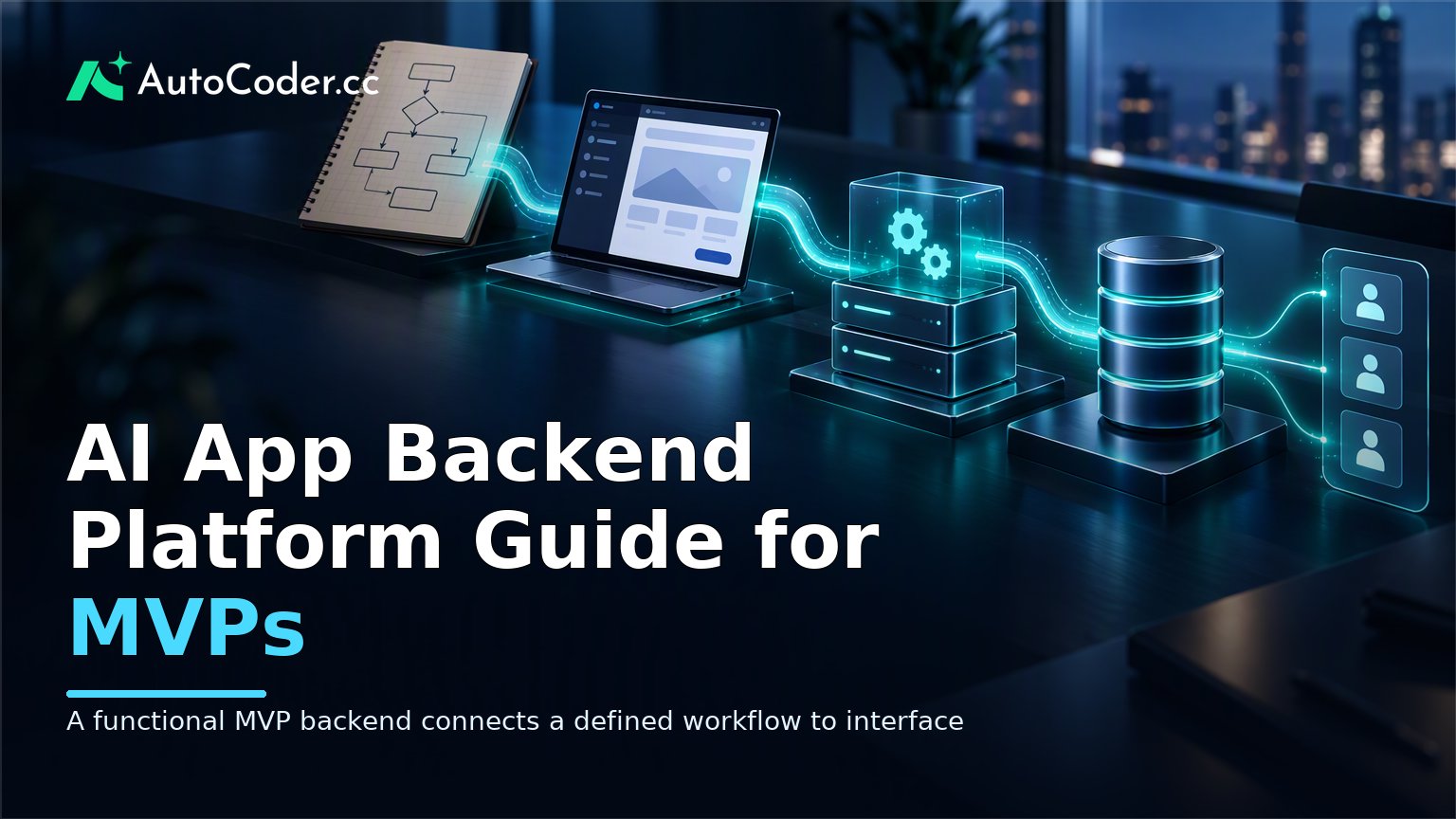
A functional MVP backend connects a defined workflow to interface behavior, data, logic, and user access.
What an AI app backend platform is
The practical point: an AI app backend platform translates an application brief into backend components that support a real workflow, not merely a visual prototype. A frontend presents screens, forms, navigation, and feedback to a user. The backend handles the work behind those screens. It receives requests, applies rules, reads or writes data, and determines what a given user can access. A database holds structured application information, such as accounts, records, statuses, or timestamps. An AI-assisted platform can use a written description as a starting input for these parts. For example, a team might describe a small internal request-tracking app: employees submit requests, managers review them, and requesters can see the current status. That description implies several backend needs. This is different from a tool that creates only interface mockups. An AI full-stack app builder is relevant when the objective is a functional application with connected frontend, backend, and database elements. The output should be treated as an implementation baseline: something concrete enough to exercise the intended user journey, inspect the generated structure, and refine according to product feedback. Generation works best when requirements are stated in terms of observable behavior. “Build a marketplace” leaves many central decisions unspecified. “Let signed-in sellers create listings with a title, description, and availability; let buyers view listings but not edit them” gives the system clearer inputs. The term “AI backend generator” can therefore be misleading if it suggests a finished backend is produced without design work. It is better understood as assistance with converting an initial specification into editable application components. The quality and completeness of the result remain closely tied to the clarity of the workflow and the care taken in validation.The backend components that matter for an MVP
The practical point: evaluate whether a platform can support the smallest complete workflow your users need, rather than counting generated features. For an MVP, the backend should enable a user to complete a valuable task from beginning to end. That usually requires a limited but connected set of components. The appropriate scope depends on the product, yet several categories recur across applications. Data models and database operations. AI database generation can provide a first structure for the information the app needs to retain. A scheduling product may need appointments, availability, and users. A feedback tool may need submissions, categories, owners, and statuses. The important question is whether the model reflects real relationships and rules. Application logic. Logic connects actions to outcomes. When someone submits a form, the application may validate required details, create a record, assign an initial state, and return a confirmation. Some logic is straightforward, while other logic involves exceptions, dependencies, or business-specific policies. Authentication and access control. AI authentication setup can help establish common account flows and protected parts of an application. It does not remove the need to specify roles and permissions. A simple MVP may have only signed-out and signed-in states. Another may require distinct abilities for administrators, contributors, customers, or reviewers. Frontend-to-backend connections. A useful functional prototype has forms and views connected to the underlying data and logic. A screen that displays a list should handle empty states as well as populated ones. A form should make clear what happens when an entry is missing or invalid. Deployment and iteration. MVP work benefits from a path to make an application available for review and continue modifying it as learning accumulates. Deployment is not simply a final handoff. It makes it possible to test a realistic flow with intended users or internal stakeholders, then revise the product based on what they encounter. AutoCoder’s AI app builder is described as generating frontend, backend, and database components from natural-language requirements, with authentication and deployment workflows. For teams considering any platform in this category, the relevant question is whether its documented capabilities cover the components needed for the first usable workflow—not whether it can produce a long feature list.How AI-generated backends fit into MVP development
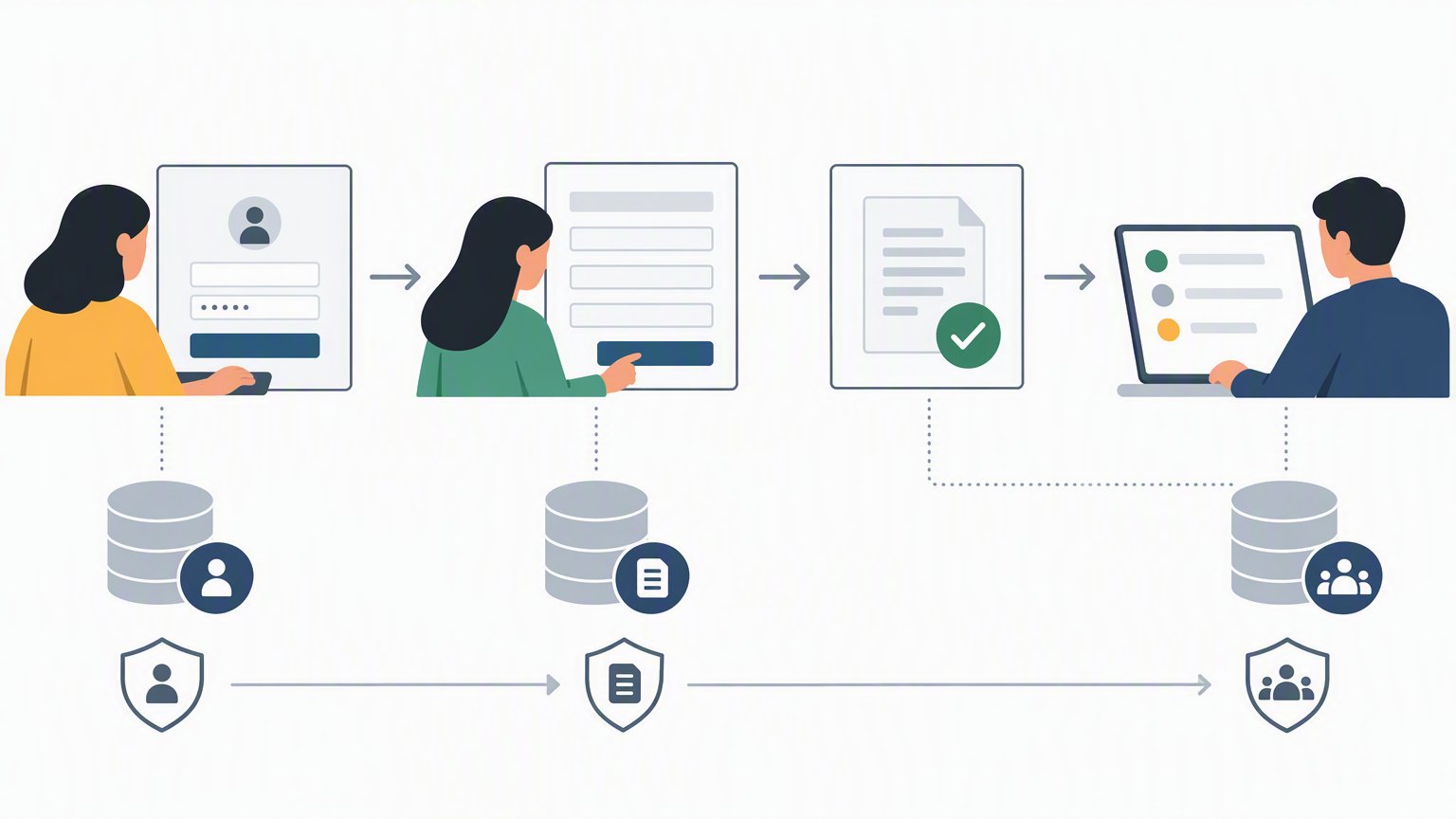
A useful MVP begins with one complete user journey and the minimum data and permission rules needed to complete it.
How to evaluate an AI app backend platform
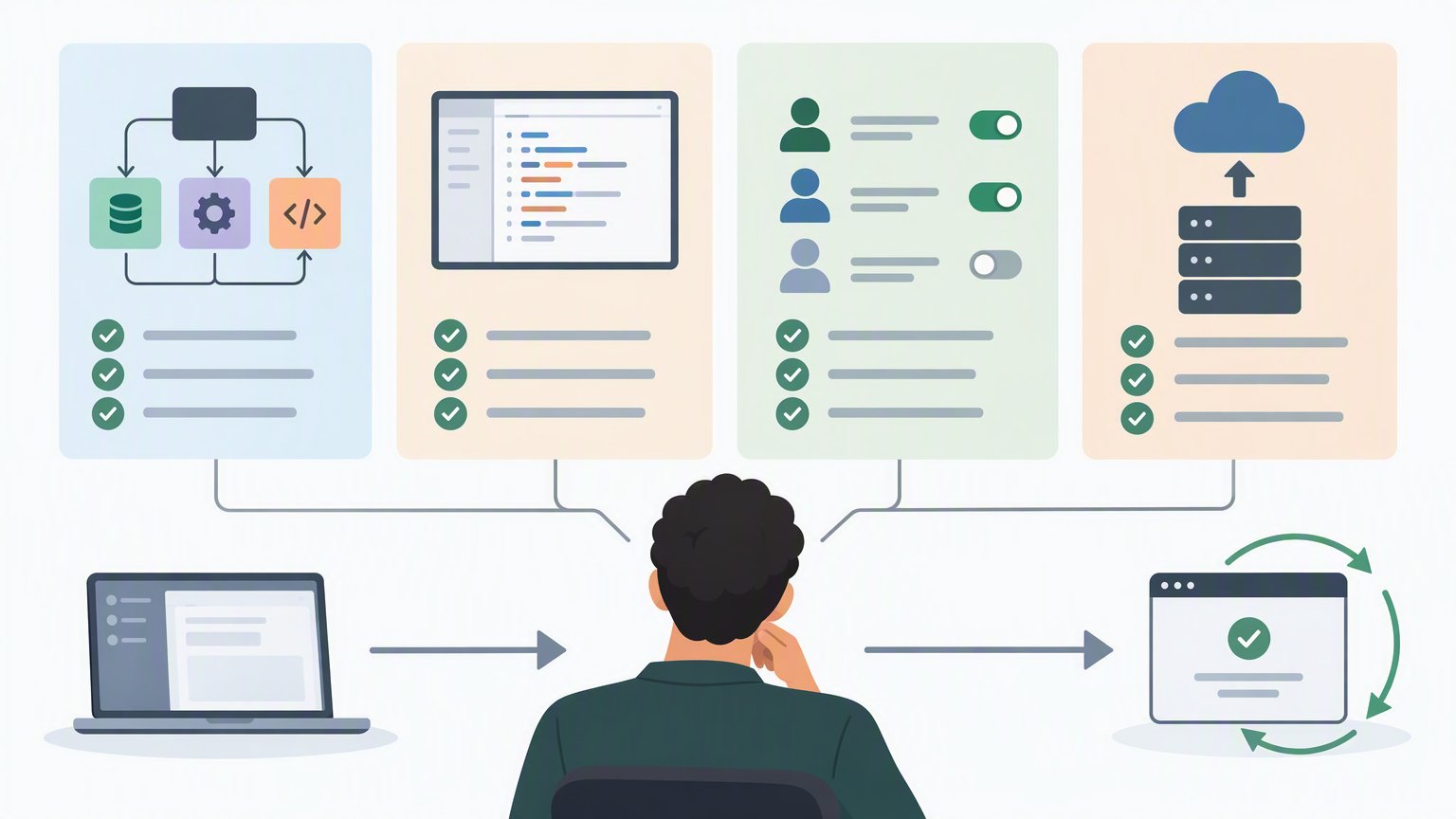
Tool selection should focus on workflow coverage, editability, access control, and the ability to continue iterating after the first prototype.